
Bringing a medical device from concept to commercial manufacturing requires coordinated decisions across the medical device supply chain. These decisions include material selection, component design, engineering validation, production equipment, and OEM/ODM support. Technical innovation defines what a product is intended to do. Progress toward commercialization is also shaped by manufacturing feasibility, supplier coordination, and scale-up readiness. Within this process, Design for Manufacturability (DFM) helps teams assess production requirements while the design is still being refined.
At Medtec China 2026, we bring relevant technologies, suppliers, and manufacturing partners together in one offline setting. Apply now for a free professional visitor pass and prepare the technical questions your next project needs to resolve.
Medtec China 2026 Highlights
The 20th Medtec China will be held at the Shanghai New International Expo Centre in Pudong.
| Event Detail | Official 2026 Information |
| Dates | September 1 to 3, 2026 |
| Hours | 9:00 a.m. to 5:00 p.m. on September 1 and 2; 9:00 a.m. to 3:00 p.m. on September 3 |
| Venue | Shanghai New International Expo Centre, Pudong, Shanghai |
| Halls | N1 to N4 |
| Planned scale | 47,000 square meters |
| Planned participation | 1,100 exhibitors and an estimated 93,000 professional visits |
| Admission | Free with advance registration by August 30; RMB 100 for on-site registration |
Medtec China 2026 organizes the exhibition into nine specialized product themes:
| Hall | Official Product Themes | Main Categories |
| N1 and N2, International Pavilion | Materials & Components; Precision Manufacturing & Processing | Metallic, ceramic, biological, glass, polymer, and composite materials; components; adhesives; bonding products; tubing; laser processing; CNC; additive manufacturing; molding services and equipment; tubing and extrusion equipment; surface treatment |
| N1, ADTE | High-End Active Medical Equipment | Electronic components and assemblies for active devices; sensors; drive systems; active medical device technologies |
| N2 | IVD, Diagnostics & Laboratory; Drug Delivery & Wound Care | IVD reagents and consumables; filtration; intravenous injection; laboratory equipment; drug-delivery systems and components; dressing materials; formulation processing |
| N3 | OEM/ODM, Automation Manufacture & Smart Factory | Full-service OEM/ODM contract manufacturing; medical integration and automation; drive control; robotics; smart-factory solutions |
| N4 | Packaging, Sterilization & Cleanroom; R&D, Design & Regulatory; Testing, Metrology & Quality | Packaging; sterilization; labeling; cleanrooms; R&D and design services; engineering software; regulatory consulting; testing; metrology; inspection; quality assurance supplies |
Tingtao Advanced Materials will present medical-grade polymers in N2, while Shenzhen Zero Origin Technology will show precision spring components.
WALMO will demonstrate all-electric medical injection-molding equipment. Tianjin Xuansheng Technology, or TXS, will present mold, molding, assembly, and packaging services. Shanghai Star Laser will show medical laser components and ODM support.
Review the official exhibitor list before your visit, then apply for a free Medtec China 2026 pass. The Medtec International Lounge in N3 is reserved for overseas visitors and provides space for meetings, games, and photos. Pre-registered overseas visitors can collect an early-bird gift there.
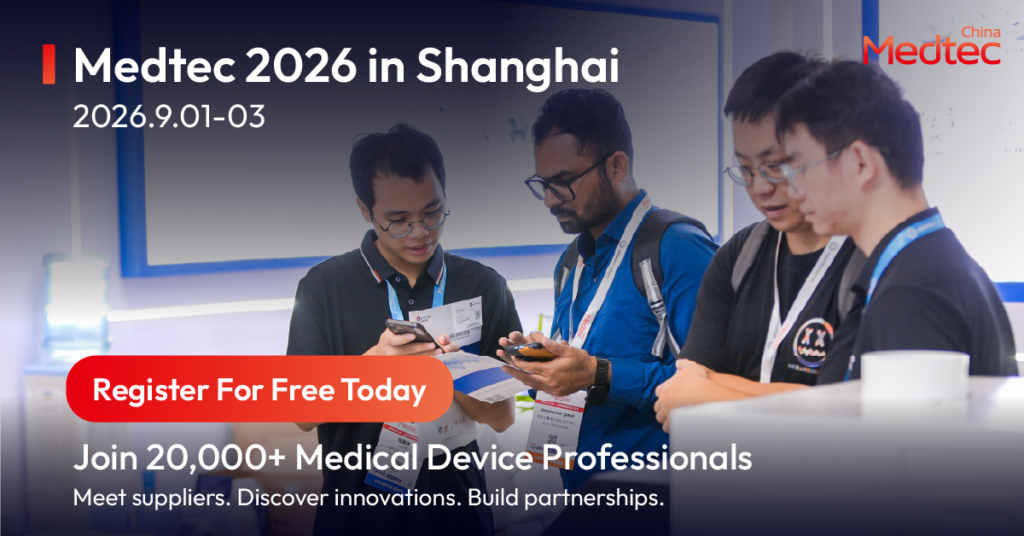
Inside MedTech Innovation and Manufacturing at Medtec China
The four halls connect the development and manufacturing stages.
1. Materials and Components: Building the Performance and Design Foundation for Innovation
Material and component choices define many of a device’s practical limits. Metals, polymers, ceramics, biomaterials, adhesives, tubing, springs, sensors, and drive systems can affect strength, flexibility, chemical resistance, fluid control, electrical function, size, and sterilization compatibility.
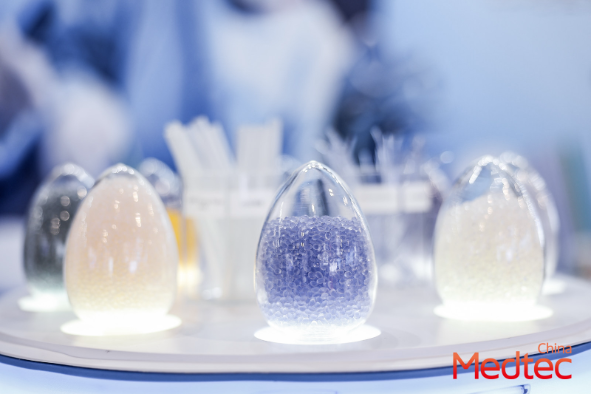
At Medtec China, teams can compare these inputs with the processing methods that shape them. Tingtao’s medical-grade polymer portfolio, Zero Origin’s multi-strand spring tubes, and LINSTANT’s medical polymer tubing show how material behavior and component geometry connect with catheter and minimally invasive device design. They show innovations in medical technology being tested against engineering requirements.
Takeaway for Visitors: Compare candidate materials and components against required properties, dimensions, sterilization methods, and documentation. Apply for a free pass and map priority booths across Halls N1 and N2.
2. Engineering R&D and Validation: Moving Innovation from Concept to Manufacturability
Medical device R&D is not only the creation of a new function. It must establish that the design can be processed, assembled, inspected, validated, and reproduced. Design for Manufacturability makes these conditions visible before late-stage changes become difficult.
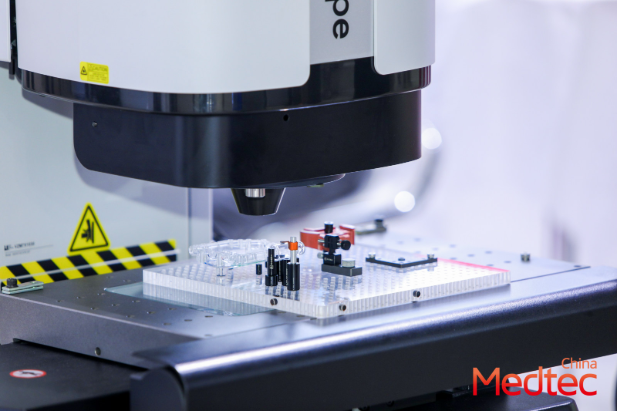
The show combines laser processing, CNC machining, additive manufacturing, molding, extrusion, surface treatment, engineering software, consulting, testing, metrology, and inspection. This lets visitors discuss tolerances, samples, process limits, measurement methods, validation support, and production transfer with relevant specialists.
Suzhou Zeheng Precision’s CNC components and small-batch prototyping services are one example. LINSTANT’s extrusion, injection molding, coating, material modification, and finished-product assembly capabilities show another route from design requirements to a producible catheter or tubing solution.
Takeaway for Visitors: Visit Halls N1 and N2 to assess processing capabilities; visit Hall N4 to review R&D, validation, testing, and quality support. Bring drawings so engineering, quality, and sourcing colleagues can conduct one shared review.
3. Production Equipment and Automation: From Manufacturing Feasibility to Stable Mass Production
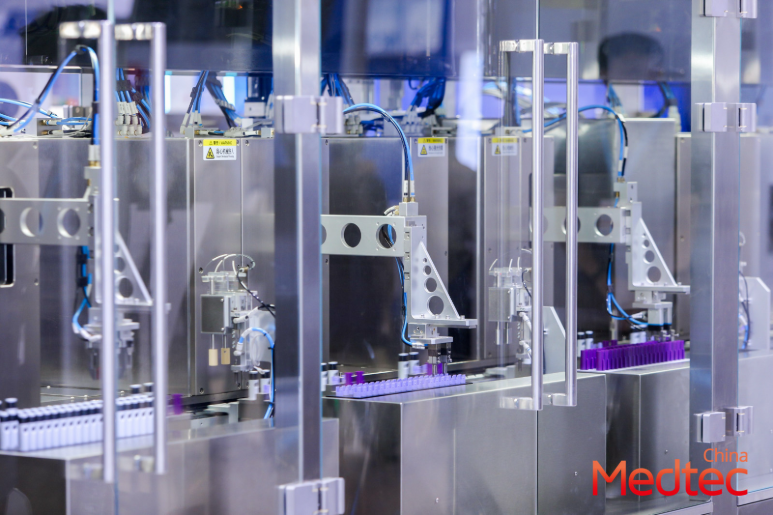
Once manufacturability is established, the next issue is repeatability at the required volume. In medical device production, equipment configuration, process control, automated handling, inspection, data capture, and traceability influence production stability and quality oversight.
Production equipment spans several official product themes. N1 and N2 include molding services and equipment, plus tubing and extrusion equipment, within Precision Manufacturing & Processing. N3 focuses on medical integration and automation, drive control, robotics, and smart-factory solutions. N4 adds testing equipment, metrology, inspection technologies, and quality assurance supplies.
WALMO’s all-electric injection-molding systems include process-data traceability functions. SAN will present precision extrusion equipment and customized line solutions. Maider will display automated solutions for medical consumables and drug-device combination products. Visitors can examine operating principles, integration needs, validation support, and service arrangements directly with providers.
Takeaway for Visitors: Use Halls N1 and N2 to assess molding and extrusion equipment, Hall N3 for automation and smart-factory solutions, and Hall N4 for inspection and metrology. Prepare an evaluation checklist covering output, traceability, changeovers, and cleanroom conditions.
4. OEM/ODM and Commercial Manufacturing: Bringing Innovation to Market
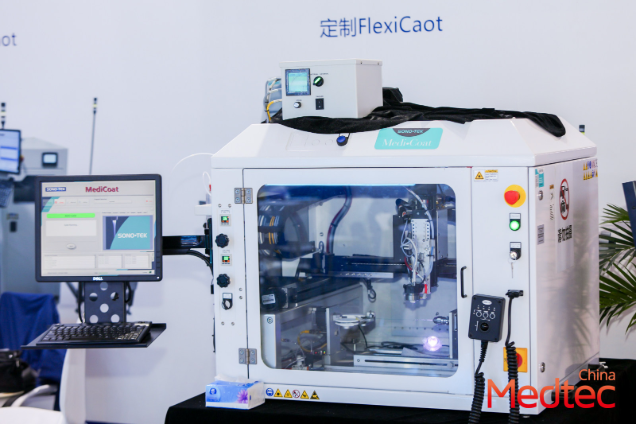
Teams may need added capacity, specialized processes, or an integrated partner for tooling, molding, assembly, packaging, or complete-device development. OEM, ODM, and contract manufacturing can meet these needs when responsibilities, quality controls, documentation, intellectual property, and scale-up plans are defined.
N3 gives visitors a focused setting for these discussions. Across the show, TXS describes a workflow covering product development support, mold fabrication, cleanroom injection molding, assembly, and packaging. Shanghai Star Laser supports medical laser modules, prototype debugging, scaled production, and complete-device ODM development. Such capabilities can connect a product team’s internal resources with the work required for commercial manufacturing.
Takeaway for Visitors: Focus on Hall N3 for full-service OEM/ODM contract manufacturing and related automation resources. Schedule targeted meetings and bring the project scope, expected volumes, documentation needs, intellectual-property requirements, and commercialization timeline.
Medtec China 2026: From On-Site Connections to Continuous Innovation
Moving a medical device from idea to mass production depends on more than a technical breakthrough. It requires coordinated decisions across materials, components, engineering R&D, processing, equipment, quality, and manufacturing partners.
At Medtec China, we connect these stages in one offline platform. Visitors can move from material and component discussions in N1 and N2 to OEM/ODM and automation in N3, then to packaging, sterilization, R&D services, testing, and quality in N4. This structure helps teams examine medical device manufacturing as one continuous process from R&D to commercialization.
Apply for your free Medtec China 2026 professional visitor pass by August 30 and join us in Shanghai from September 1 to 3. Overseas visitors can also plan time at the Medtec International Lounge in N3 for discussions and informal activities. Complete pre-registration in advance to receive the available early-bird gift, and come prepared to identify the technologies and partnerships that can move your next MedTech innovation forward.