
Laser System Can Remotely Capture Images Inside Your Body
MIT researchers say the technique may help remotely image and assess health of infants, burn victims, and accident survivors in hard-to-reach places.

Using 24 GHz Doppler Radar Sensors for Noncontact Human Vitals Detection
Health and wellness monitoring is a primary way to manage personal health and awareness for a healthy lifestyle. Many wearable activity tracking devices, smart watches, and smartphone applications collect and analyze data from bodily sources.

Bioresorbable Patch Offers New Alternative for Arterial Healing
When a patient experiences 70 percent or greater stenosis in the carotid artery — a condition that can cause lack of cerebral blood flow, stroke, and in some cases, death — surgeons perform a procedure known as carotid endarterectomy (CEA) to remove the plaque causing the artery stenosis.1,2 The procedure consists of a longitudinal incision made from the common to the internal carotid artery, allowing for removal of the plaque that deposits in the bifurcation.

Battery-free pacemaker reduces equipment to size of a dime
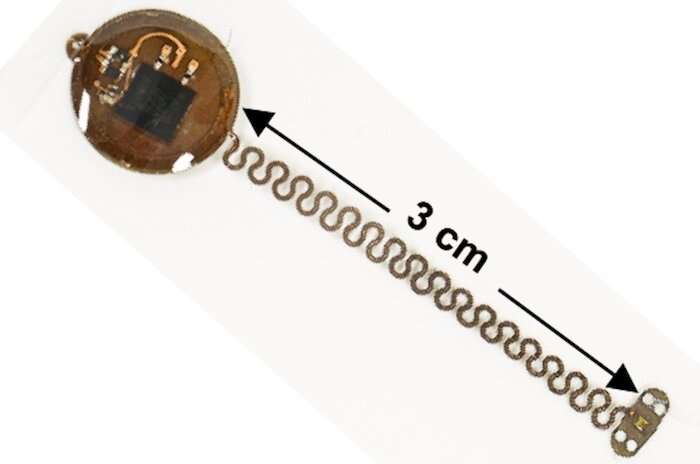
Researchers have developed and tested for the first time in vivo a miniaturized, battery-free pacemaker that supports optical and electrical multisite stimulation. The new device is powered wirelessly, omitting the weight and bulk associated with battery power, along with the need to replace or recharge, thereby allowing for indefinite operation.
New ‘tooth-on-a-chip’ could lead to more personalized dentistry
A so-called “tooth-on-a-chip” could one day enable more personalized dentistry, giving dentists the ability to identify dental filling materials that work better and last longer based on a patient’s own teeth and oral microbiome.

New Biomaterials Speed Trend Toward Smaller Medical Devices and Implants
Ultra-high molecular weight polyethylene fibers offer performance characteristics that could benefit both patients and surgeons.

Can These Pediatric Devices Make a Difference?
Check out the 12 finalists in the “Make Your Medical Device Pitch for Kids!” competition to be held live during the 7th Annual Pediatric Device Innovation Symposium hosted by Children’s National Health System.

3D Printing Microstructures for New Drug Delivery Systems with SPHRINT
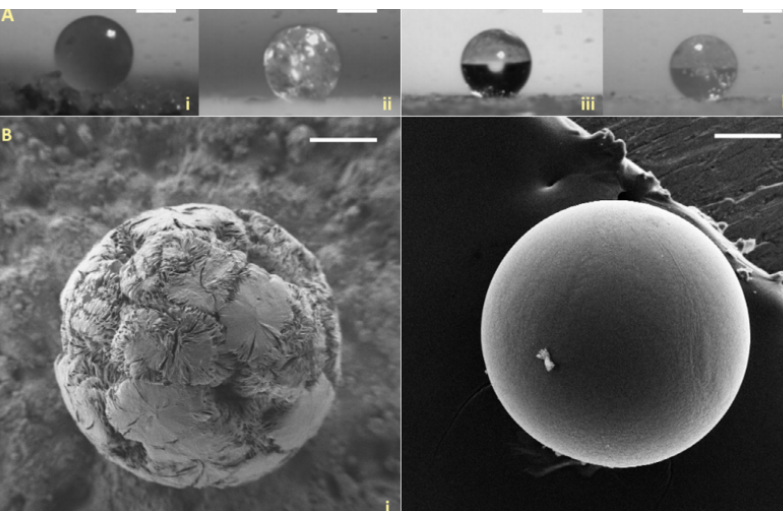
the recently published, ‘SPHRINT – Printing Drug Delivery Microspheres from Polymeric Melts,’ authors Tal Shpigel, Almog Uziel, and Dan Y. Lewitus explore better ways to offer sustained release pharmaceuticals via 3D printed structures.
New Silk Materials Can Wrinkle into Detailed Patterns, Then Unwrinkle to Be “Reprinted”
Scientists engineer on-demand high-resolution wrinkling for reversible printing and thermal regulation.

3 Critical Considerations for Evaluating Off-the-Shelf Software for Medical Devices
Manufacturers would be wise to understand the impact of these three risk factors when choosing software partners for their medical device.