
Driving Next-Generation Orthopedic Innovation: Why Are Global Medical Device Giants Gathering at 2026 Medtec This September?
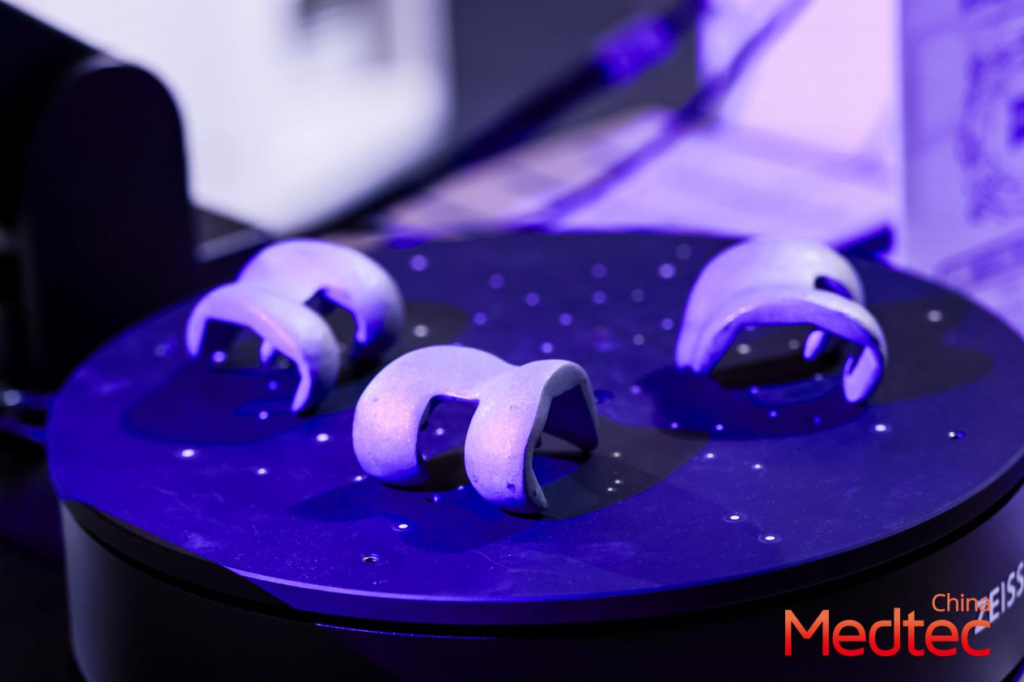
Explore orthopedic innovation at 2026 Medtec China, from biomaterials and precision manufacturing to QMS, CDMO, and suppliers.
Cardiovascular Medical Device Market Trends & Sourcing Guide: Medtec China 2026
Explore cardiovascular medical device market trends, supply chain strategies, and OEM/ODM sourcing at Medtec China 2026. Register by Aug 30 for free tickets!
One-stop Precision Medical Mold & Molding Solutions Debut at Medtec China 2026
Medtec China 2026 is around the corner. Tianjin Xuansheng Technology Co., Ltd.,(TXS) a China Taiwan-invested precision molding manufacturer, will showcase our full-spectrum integrated manufacturing solutions for medical devices. We sincerely welcome all industry professionals to stop by our Booth 3F602, Hall N3 for in-depth communication and business discussions.
CHINA SAN: Deepening Precision Extrusion of Special & High-temperature Materials to Empower Brain-computer Interface Medical Innovation
Founded in June 2007, SAN is a national high-tech enterprise specialized in the R&D, manufacturing and sales of medium and small precision extrusion equipment for the mid-to-high-end market. Certified with ISO9001-2008 and EU CE standards and holding over 40 national patents, the company boasts strong technical strength and standardized manufacturing capabilities. SAN will present its upgraded precision extrusion equipment, core technologies and customized turnkey solutions at Medtec China 2026, collaborating with industry partners to advance high-precision medical device manufacturing.
Specializing in Precision Injection Molding for the Medical Industry, Delivering Smart, Compliant, and Reliable Solutions | WALMO to Exhibit at Medtec China 2026
The 20th Medtec China 2026 International Medical Device Design and Manufacturing Technology Exhibition will be held from September 1 to September 3, 2026, at Halls N1–N4 of the Shanghai New International Expo Center (Pudong). As a highly influential professional trade and technical exchange platform covering the entire medical device industry chain, this year’s exhibition will focus on core industry challenges such as domestic substitution of medical devices, cleanroom manufacturing, and digital traceability, bringing together cutting-edge manufacturing technologies and practical solutions from upstream and downstream sectors worldwide.
Can PEEK Be Laser Welded? How ATA Makes It Possible for Medical Devices
Medical device manufacturers have a joining problem that doesn’t get talked about enough. PEEK (polyetheretherketone) has become the material of choice across surgical instruments, implantable housings, and diagnostic devices. It’s biocompatible, sterilizable, chemically resistant, and dimensionally stable under load. It’s the ideal medical polymer but for joining it, compromises have to be made.
Baocheng Precision Mould Industrial Limited
Established in 2008 and headquartered in Shenzhen’s Guangming District, BCP is a National SRDI (Specialized, Sophisticated, Distinctive, and Innovative) Enterprise.
Driving Innovation in Minimally Invasive Interventions: Nanos Biomaterials’ Advanced PTFE Coating Technology
SUZHOU, CHINA – As the global medical device industry shifts toward increasingly complex minimally invasive procedures, the demand for high-performance components has never been higher. Nanos Biomaterials (Suzhou) Co., Ltd., a leader in medical-grade material science, is at the forefront of this evolution with its proprietary PTFE (Polytetrafluoroethylene) coating technology.
ADWANTEK Debuts at Medtec: Precision Inline Measurement & Control Solutions Boost Medical Device Manufacturing Efficiency
Shenzhen Adwantech Technology Co., Ltd. presents its inline measuring equipment and intelligent process solutions for precision medical extrusion at Medtec. We demonstrate high-precision quality control capabilities for medical wires, minimally invasive interventional catheters and polymer tubing, delivering stable, efficient and traceable process control solutions to medical device manufacturers.
2026 Medtec | ANQING BAOJIE PACKAGING CO.,LTD Company Profile
Anqing Baojie Packaging Co., Ltd. was founded in April 2004. In 2023, the company invested 127 million yuan to establish a new factory, which covers an area of 36.89 acres and is located at No. 9 Jingxin Road, Daguan District, Anqing City. The company currently employs over 100 people, including 21 professional technicians and inspectors. The company specializes in producing a series of disposable self-sealing sterilization pouches, medical sterilization pouches, medical gusseted pouches, medical continuous roll tube pouches, Tyvek roll, Tyvek headbags, medical crepe paper, SMMS nonwoven wrap, sterilization indicator tape, dental bids, composite film roll, medical adhesive paper rolls, paper trays, and other medical packaging materials. Its products are exported to the US, Japan, South Korea, Russia, Australia, Europe, the Middle East, South America, and Southeast Asia.