
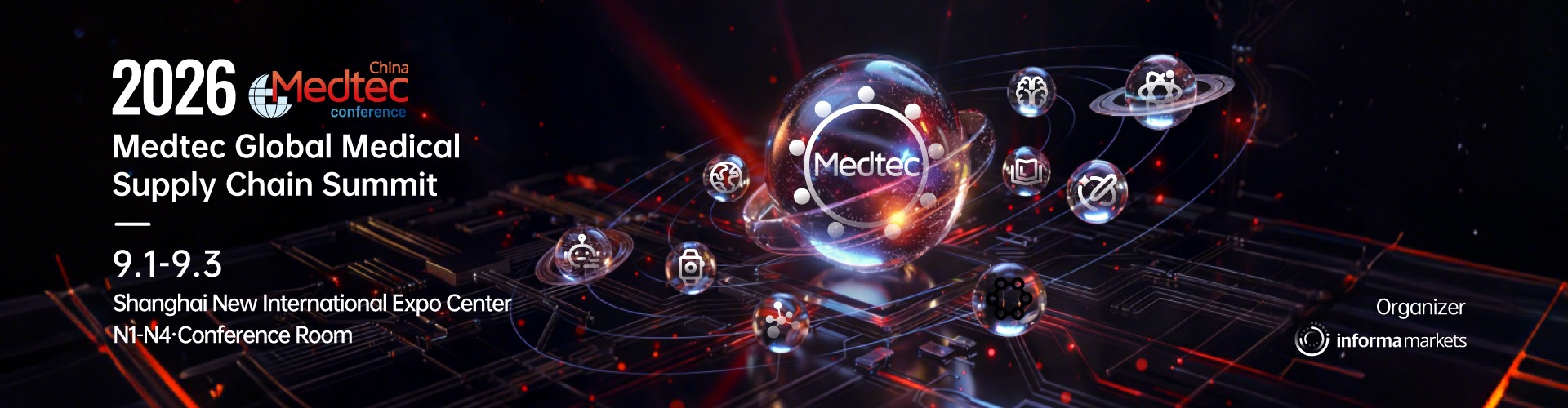
If you are planning around Medtec China, it helps to understand how the role of exhibitions is changing. Medtec China is positioned as a medical device R&D and manufacturing exhibition that brings together suppliers, engineers, sourcing teams, and decision-makers across materials, components, manufacturing, automation, packaging, testing, and regulatory services. The 2026 event takes place September 1–3, 2026, at SNIEC N1–N4 in Shanghai. Visitors can pre-register for free before August 30, while onsite entry requires a paid ticket. If you want to make smarter sourcing decisions, strengthen supplier discovery, and stay close to where the medical manufacturing market is heading, explore the international medical trade show details and get your visitor pass early so you can turn one event into long-term procurement value.
Digital Procurement Has Changed Buyer Behavior
Procurement teams do not start their supplier search at the show floor anymore. In many cases, they start weeks or months earlier.
Today’s buyers often use digital tools to:
- Search supplier databases
- Compare capabilities online
- Review certifications and product categories
- Watch demo videos
- Schedule meetings before arrival
- Shortlist vendors based on public information
This shift has changed the role of exhibitions. Buyers are less likely to walk in with no plan. They are more likely to arrive with a list of target suppliers, clear questions, and specific gaps they want to fill.
That is not a sign that expos matter less. It means the value of the expo has moved higher up the decision chain. Instead of being only a discovery tool, the event becomes a place to validate, compare, and move decisions forward.
Why In-Person Expos Still Matter
If digital procurement tools are improving, some people ask whether international exhibitions will become less important. In practice, the opposite may be true.
Digital tools are excellent for speed and scale. They are less effective at revealing how a supplier actually thinks, communicates, and operates.
What in-person events still do better
A live event helps buyers assess things that are hard to judge online:
- How clearly a supplier explains its process
- Whether technical teams can answer detailed questions
- How confident the company sounds when discussing quality
- Whether the booth team understands medical requirements
- How the supplier compares to others in real time
These signals matter in medical device manufacturing, where supplier quality affects more than price. Documentation, traceability, engineering support, and change control all shape long-term risk.
Face-to-face contact builds trust faster
Trust is not built through a brochure or a product page alone. It grows faster when people meet, ask direct questions, and see how the other side responds under pressure.
For sourcing and procurement teams, that matters because supplier decisions often involve uncertainty. In-person interaction helps reduce that uncertainty.
Expos Are Becoming Supplier Validation Hubs
The future of exhibitions is less about passive display and more about active validation.
A digital-first buyer may already know what a supplier claims. The expo helps answer the next question: can that claim be trusted?
What buyers now validate at events
Instead of gathering only basic information, attendees often use expos to test:
- Capability depth
- Responsiveness
- Quality maturity
- Fit with current sourcing needs
- Alignment between sales claims and technical reality
- Likelihood of a productive long-term relationship
This is why booth conversations are becoming more focused. Buyers are not only browsing. They are screening for risk, value, and follow-up potential.
Events also help compare multiple suppliers quickly
One of the biggest advantages of an exhibition is still comparison. In one day, a buyer can speak with several suppliers in the same category and notice differences that would take much longer to uncover online.
That speed matters when procurement teams need to:
- Build backup supplier options
- Compare new market entrants
- Understand pricing logic
- Evaluate specialization
- Identify who deserves deeper qualification
Hybrid Research Habits Are Shaping Expo Strategy
The future is not digital versus physical. It is hybrid.
Most buyers now move between online research and in-person evaluation. That pattern is changing how successful expo visits are planned.
What the new buyer journey looks like
A common path now looks like this:
- Research suppliers online
- Shortlist promising companies
- Book meetings before the event
- Validate capabilities on-site
- Follow up digitally after the event
- Move top candidates into formal qualification
This hybrid process is more efficient than relying on either channel alone.
Why this matters for attendees
Visitors who still treat expos as purely walk-in experiences may waste time. Stronger results usually come from combining digital preparation with live evaluation.
Before the event, attendees should:
- Define sourcing priorities
- Review exhibitor categories
- Set meeting objectives
- Prepare technical and commercial questions
- Plan hall routes and time blocks
That preparation turns the expo from a general visit into a focused procurement tool.
What Exhibitors Should Do Differently Going Forward
Exhibitors are also operating in a new environment. Buyers now arrive more informed and more selective. That means booth strategy needs to evolve.
Booth presence alone is no longer enough
A strong stand design still helps, but it cannot carry the full message. Suppliers need consistency between what buyers see online and what they hear at the event.
Exhibitors should make sure they can clearly communicate:
- Core capabilities
- Medical application experience
- Quality systems and documentation support
- Lead time and scale realities
- Engineering and project support
- Next-step process after the event
If digital information looks polished but booth conversations feel vague, trust drops quickly.
Technical readiness matters more
Sales teams alone are often not enough for today’s buyers. Many procurement and sourcing professionals want direct access to technical, quality, or operations staff who can answer real questions.
Going forward, exhibitors should consider bringing team members who can speak credibly about:
- Process control
- Materials
- Validation support
- Inspection methods
- Change management
- Capacity planning
That is often what separates a memorable exhibitor from a forgettable one.
What Attendees Should Do Differently Going Forward
The digital-first era also changes what smart visitors need to do.
Treat the expo as a decision accelerator
Do not use the event only to collect brochures. Use it to move supplier decisions closer to action.
That means asking questions such as:
- What makes this supplier different from others in the same category?
- Can they support our project stage and volume?
- How mature is their medical quality mindset?
- What risks do we still need to investigate?
- What is the right next step after this meeting?
Document more, not less
When buyers see many suppliers in a short time, memory can blur fast. Good note-taking becomes even more important in a hybrid procurement model.
Capture details like:
- Technical fit
- Quality confidence
- Communication strength
- Commercial potential
- Red flags
- Follow-up actions
The more structured your notes, the stronger your post-event decisions will be.
The Event Role Is Expanding Beyond Transactions
Another change is that expos now support more than immediate sourcing activity. They also serve marketing, market intelligence, and brand positioning roles.
For procurement teams, events reveal market direction. For suppliers, they show how buyer expectations are changing. For marketing teams, they provide a live view of which messages resonate and which no longer do.
This broader role makes international expos more strategic, not less.
Expos now help organizations understand:
- Where buyer demand is shifting
- Which capabilities are becoming standard
- What suppliers emphasize most
- How digital and physical engagement connect
- Which partnerships may matter in the next few years
That is valuable for sourcing, procurement, and marketing alike.
What the Future Likely Looks Like
International medical expos are unlikely to disappear in a digital-first procurement world. More likely, they will become sharper, more selective, and more integrated with digital workflows.
The most successful events will likely be those that support both:
- Efficient pre-show digital research
- High-value face-to-face validation
The most successful attendees will be the ones who prepare digitally, engage deliberately on-site, and follow up quickly after the event.
The most successful exhibitors will be the ones who stop treating the booth as the entire message and start treating it as one part of a wider buyer journey.
Final Thoughts
The future of international medical expos is not about resisting digital procurement. It is about fitting into it better. Digital tools help buyers search faster, compare more widely, and plan more effectively. In-person events still provide something digital channels cannot fully replace: live validation, stronger trust, faster comparison, and better relationship building. For sourcing, procurement, and marketing teams, the opportunity is clear. Use digital tools to prepare, use the expo to test and confirm, and use follow-up to turn conversations into real business outcomes. That is how exhibitions stay relevant in a digital-first world.