
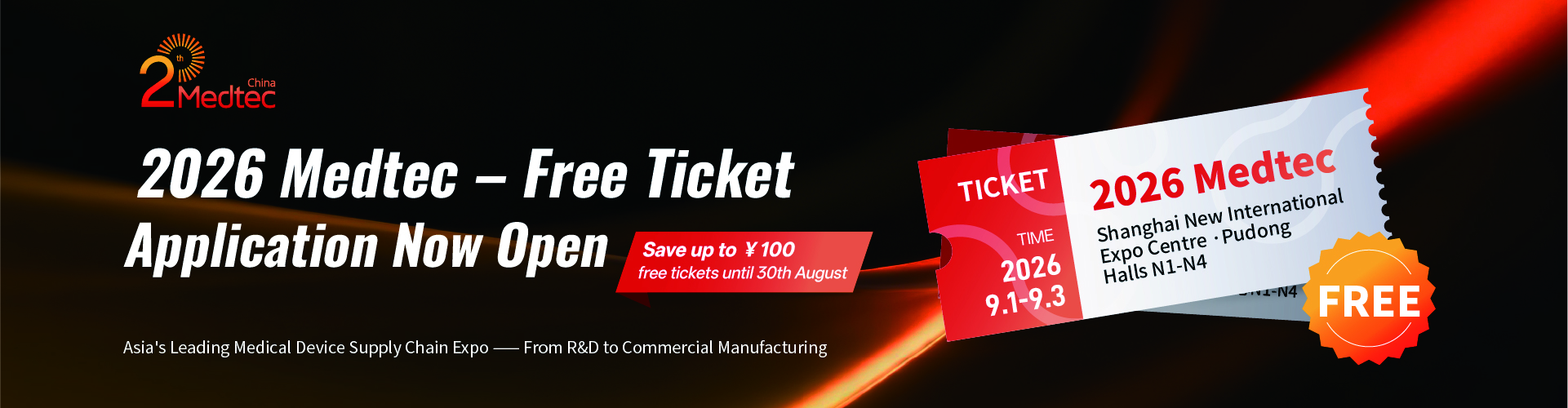
Medtec China celebrates its landmark 20th edition from September 1–3, 2026, at the Shanghai New International Expo Centre (SNIEC), featuring 1,100+ global suppliers across 47,000 square meters. We invite procurement leaders and engineers to pre-register online today for free entry.
Medical device manufacturing demands extreme precision, repeatable micro-accuracy, and strict adherence to international quality standards. Modern surgical tools, orthopedic implants, diagnostic chips, and catheters rely on specialized processing machinery to handle biocompatible metals and engineering polymers. Choosing high-performance processing equipment remains essential for maintaining tight tolerances and reducing unit production costs.
Evaluating machinery vendors across China requires a structured methodology covering technical capabilities, machine stability, and quality management systems. Sourcing teams visiting a premier medical expo in China gain direct access to operational equipment, enabling direct vendor audits. This guide provides actionable strategies for evaluating equipment builders and building resilient supply chain partnerships.
Core Technical Requirements for Precision Medical Machinery
Precision machinery used in medical component manufacturing must achieve micron-level tolerances consistently across multi-shift automated production runs. Swiss-type CNC turning centres, multi-axis machining tools, femtosecond laser cutters, and micro-injection molding machines form the backbone of modern device production. These advanced machines process tough biocompatible materials, including Nitinol alloys, titanium, implantable PEEK, and stainless steel.
Thermal stability and structural rigidity are vital parameters when evaluating high-precision equipment performance. Thermal expansion during continuous machining operations can cause subtle dimensional drift, potentially compromising delicate components like orthopedic bone screws or micro-stent struts. Leading machine builders integrate active thermal compensation systems, direct-drive spindles, and solid granite bed structures to maintain consistent positional accuracy.
Multi-axis synchronization enables single-setup production for complex medical components, eliminating cumulative machining errors associated with multiple clamping steps. Modern five-axis CNC milling tools and multi-spindle turning centres effortlessly execute intricate contours, micro-drilling, and smooth surface finishing required for endoscopic tools. Minimizing manual secondary handling significantly accelerates total production throughput and improves overall part yield.
Integrated quality monitoring technology plays a crucial role in reducing defect risks in medical component manufacturing. Contemporary machinery features inline laser sensors, high-speed touch probes, and automated tool wear monitoring systems to identify dimensional variances immediately. Automated closed-loop feedback allows CNC controllers to adjust machining parameters dynamically, preventing non-conforming parts from moving down the assembly line.
Evaluating Suppliers at a Medical Expo in China
Conducting thorough vendor evaluations requires a comprehensive technical framework tailored to medical manufacturing demands. When meeting equipment suppliers, engineering teams should evaluate machine design specifications, controller software compatibility, spindle runout metrics, and static rigidity ratings. Verifying ISO 13485 certification and comprehensive process validation documentation (IQ/OQ/PQ) remains mandatory for medical supply chain integration.
Leading machinery manufacturers present specialized equipment solutions engineered specifically for cleanroom environments. High-precision molding machines and micro-tubing extrusion lines feature oil-free electric servo drives, stainless steel cladding, and HEPA laminar flow hoods to prevent airborne particulate contamination during component molding. Evaluating cleanroom compatibility early prevents costly retrofit modifications during factory installation.
Assessing supplier engineering support and design-for-manufacturability (DFM) expertise is equally important for long-term production success. Capable equipment vendors collaborate directly with medical original equipment manufacturers to optimize cutting tool paths, select specialized carbide inserts, and develop custom workholding fixtures. This collaborative technical support shortens equipment qualification schedules and ensures smooth transitions into full-scale mass production.
Supply chain transparency and robust material traceability complete the machinery vendor evaluation process. Equipment builders must demonstrate transparent component sourcing protocols for critical machine subassemblies, including linear guides, servomotors, and optical encoders. Partnering with suppliers who utilize premium subcomponents guarantees long-term operational reliability, simple spare parts sourcing, and minimal unscheduled equipment downtime.
Sourcing Equipment at the Medtec China Trade Show
Attending the Medtec China Trade Show provides global sourcing managers and manufacturing engineers with an efficient platform to evaluate cutting-edge equipment solutions. Visiting machinery exhibition booths allows technical teams to observe live equipment demonstrations, inspect finished sample components, evaluate surface roughness profiles, and verify spindle vibration metrics under actual high-speed machining conditions.
Direct face-to-face technical discussions with machinery developers help clear complex equipment specifications quickly. Engineering teams can discuss specific manufacturing bottlenecks, evaluate custom automation options, and review machine delivery timelines directly with factory technical leaders. Establishing direct communication channels during the exhibition streamlines subsequent factory site audits and formal commercial proposal reviews.
Connecting with equipment experts during the Medtec China Trade Show also exposes sourcing teams to complete turnkey manufacturing lines. Equipment builders increasingly combine high-precision machining centres with robotic part loaders, laser marking stations, and automated optical inspection systems. These integrated production cells maximize floor space efficiency, lower labor overhead, and maintain consistent quality across high-volume production operations.
Integrating digital connectivity and smart factory features into machinery offers significant operational advantages. Modern processing machinery incorporates IoT sensors and standardized communication protocols to collect real-time performance data. Sourcing equipment with advanced telemetry capabilities enables predictive maintenance, reduces unexpected machine downtime, and provides full digital traceability for regulatory compliance audits.
Strategic Supplier Selection and Risk Mitigation
Long-term success in medical component manufacturing depends on establishing strategic partnerships with machinery suppliers capable of ongoing technical innovation. Sourcing managers must evaluate total cost of ownership beyond initial equipment acquisition prices. Factoring in energy efficiency, preventive maintenance costs, local technical service responsiveness, and long-term spare parts availability ensures sustainable operational performance over time.
Executing a structured supplier onboarding process mitigates operational risks during new equipment procurement. Procurement teams should request comprehensive sample machining trials, conduct statistical process capability studies (Cpk evaluation), and perform rigorous on-site factory audits before finalizing equipment orders. Meeting prospective equipment partners at a specialized medical expo in China accelerates this preliminary qualification phase significantly.
Building strong collaborative relationships with Chinese machinery manufacturers enables device companies to adapt swiftly to changing market demands. Equipment builders offer flexible customization options, rapid engineering response times, and competitive delivery schedules. Establishing transparent technical communication guarantees seamless machine integration, empowering medical device manufacturers to maintain high quality while optimizing manufacturing costs, supported by the extensive supplier network at Medtec China.
Elevating Component Production Quality and Efficiency
Selecting the ideal precision processing machinery requires balancing advanced technical capabilities, rigorous quality validation, and dependable supplier support. By applying a systematic supplier evaluation framework, medical device companies can secure high-performance manufacturing machinery, streamline production workflows, and maintain strict regulatory compliance across complex component manufacturing programs.
To explore the latest precision processing equipment and meet leading machinery builders, join us at the Shanghai New International Expo Centre (SNIEC) from September 1–3, 2026. Celebrating its landmark 20th edition, the event spans 47,000 square meters across Halls N1–N4, featuring over 1,100 global suppliers specializing in medical-grade materials, precision machinery, contract manufacturing, packaging, and testing.
Explore the technologies and expertise driving innovation throughout the medical device supply chain at Medtec China 2026. Pre-register now to claim your complimentary ticket and connect with potential partners face to face.