
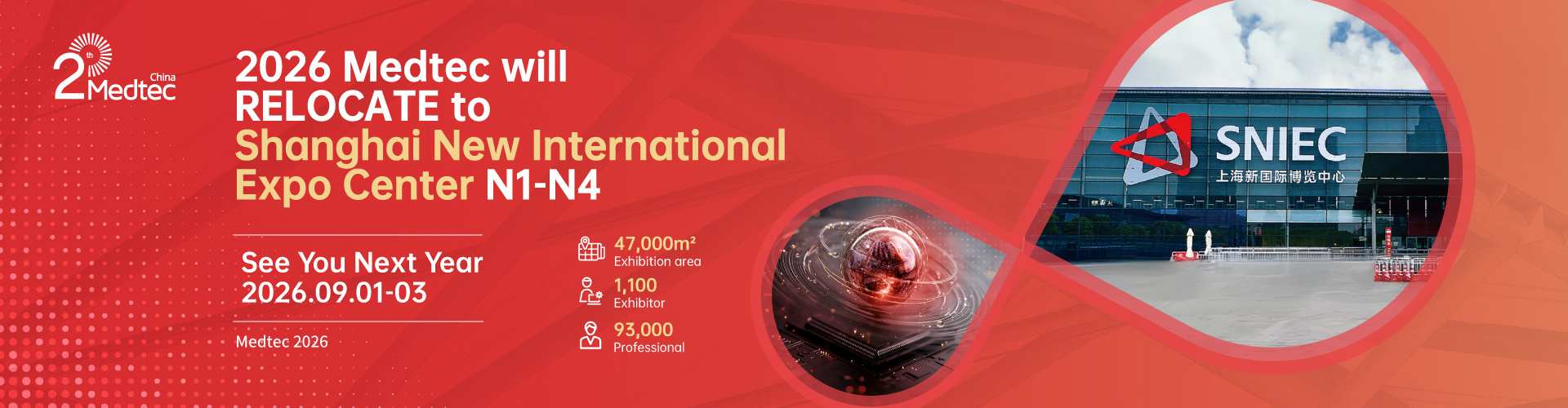
As Asia’s premier platform for medical device design and manufacturing, Medtec China celebrates its 20th edition from September 1–3, 2026, at the Shanghai New International Expo Centre (SNIEC), featuring 1,100+ global suppliers across 47,000 square meters. Pre-register online today to secure your free entry badge.
Modern point-of-care testing systems, diagnostic platforms, micro-array readers, and minimally invasive surgical tools rely on intricate optical and microfluidic architectures. Designing these systems requires extreme dimensional accuracy, high optical clarity, and flawless surface finishing to ensure consistent performance.
Chinese precision fabricators have rapidly grown into key innovation partners for global medical device manufacturers. They deliver advanced tooling, ultra-precision micromachining, and micro-injection molding designed for strict global healthcare regulations. We invite design engineers to discover how China’s manufacturing ecosystem accelerates product development timelines.
Technical Demands in Microfluidic and Optical Device Design
Microfluidic channels often require feature dimensions measured in single-digit micrometers alongside precise surface chemistry controls. Achieving predictable fluid behavior requires consistent channel depth, smooth sidewalls, and hermetic bonding between multi-layer polymer or glass substrates without clogging sub-millimeter channels during assembly.
Similarly, specialized medical optical components like micro-lenses, light guides, prisms, and fluorescence filter arrays demand supreme optical performance. Any micro-defect, birefringence, internal stress, or surface roughness can distort illumination paths, degrade signal transmission, and compromise diagnostic accuracy in critical clinical applications.
Selecting appropriate medical-grade raw materials remains a foundational engineering decision for microfluidic chips and optical subassemblies. Advanced polymers like cyclic olefin copolymers (COC), cyclic olefin polymers (COP), polycarbonate, and PMMA offer exceptional transparency, minimal auto-fluorescence, and strong chemical resistance against reagents.
When evaluating novel polymer grades or optical glass compositions, attending medical manufacturing trade shows enables engineering teams to compare material specifications directly. Designers can consult vendor technical specialists regarding material moldability, biocompatibility ratings, and optical transmission profiles across various light wavelengths.
Transitioning from early-stage laboratory prototypes to high-volume commercial production requires early design-for-manufacturability (DFM) reviews. Experienced precision molders evaluate draft angles, gate locations, cooling line placement, and wall thickness uniformity to eliminate sink marks, optical distortion, and structural stress during automated mass molding.
Sourcing Core Subsystems at Medical Manufacturing Trade Shows
Chinese precision contract manufacturers utilize advanced manufacturing infrastructure, including multi-axis CNC milling, diamond turning, femtosecond laser machining, and micro-injection molding. These cutting-edge capabilities deliver sub-micron tolerances for complex optical geometries and intricate micro-channel networks required by next-generation in-vitro diagnostic tools.
Maintaining pristine product cleanliness and optical clarity requires controlled manufacturing environments throughout every production phase. Leading component fabricators operate certified ISO Class 7 and Class 8 cleanrooms equipped with automated robotic handling, ultrasonic cleaning, and environmental monitoring to prevent particulate contamination during molding and assembly.
Comprehensive quality control relies on state-of-the-art optical metrology systems, non-contact coordinate measuring machines (CMM), and automated visual inspection tools. Manufacturers perform inline leak testing, surface roughness profiling, and precise optical alignment verification across every production batch to ensure complete part-to-part consistency.
Overseas medical device companies evaluating supplier capabilities must prioritize robust quality management systems during audits. Essential qualifications include ISO 13485 certification, full material lot traceability, robust intellectual property protection protocols, and comprehensive regulatory compliance documentation for FDA, CE, and NMPA submission files.
Effective technical collaboration depends on establishing transparent communication protocols during custom tooling development. Implementing co-engineering workflows allows technical teams to refine micro-mold designs, establish acceptable quality limits (AQL), and resolve tooling challenges prior to authorizing full-scale commercial manufacturing runs.
Streamlining Vendor Qualification for Active Device Tech
Modern diagnostic instrumentation frequently blends passive microfluidic cartridges with active electronic, thermal, and optoelectronic subsystems. Microfluidic consumable chips must integrate seamlessly with optical imaging sensors, laser diodes, LED light sources, peltier heating elements, and automated fluidic actuators within compact tabletop devices.
To reduce time-to-market and mitigate supply chain complexity, OEMs frequently partner with full-service contract development and manufacturing organizations (CDMOs). Integrated service providers manage end-to-end development, spanning initial component design, custom mold fabrication, surface functionalization, automated reagent dispensing, and sterile pouch packaging.
Prototyping speed is critical when validating microfluidic diagnostic assays and optical detection schemes. Leading Chinese vendors offer rapid tooling, soft lithography, micro-3D printing, and precision laser cutting services, enabling engineering teams to test iterative design changes in weeks rather than waiting several months.
Supply chain consolidation offers significant strategic advantages for global medical device brand owners. Sourcing combined optical-fluidic modules from single-source precision manufacturers reduces vendor management overhead, streamlines incoming quality inspection procedures, and lowers overall subassembly integration risks during final commercial assembly.
Emerging technical innovations are further expanding the capabilities of Chinese precision manufacturers. Advanced hybrid glass-polymer structures, embedded planar optical waveguides, and automated laser welding technologies are setting new performance benchmarks for next-generation point-of-care diagnostic devices and micro-endoscopic imaging systems.
Elevate Your Medical Supply Chain with Medtec China
Partnering with skilled Chinese precision manufacturers provides global medical device developers with a decisive competitive edge in manufacturing cost, development speed, and technical execution. Successfully navigating vendor selection requires rigorous technical evaluation, clear quality metrics, and proactive design-level collaboration throughout the development lifecycle.
By establishing strong partnerships with capable supply chain partners, medical device companies can overcome micro-fabrication challenges and accelerate the commercialization of innovative diagnostic tools. Building a resilient upstream supply chain ensures long-term operational success, regulatory compliance, and consistent product performance for global healthcare markets.
To discover cutting-edge solutions across the medical supply chain, join us at the Shanghai New International Expo Centre (SNIEC) from September 1–3, 2026. Explore four dedicated halls showcasing raw materials, precision processing, active device tech, and OEM contract manufacturing services.
Celebrating its landmark 20th edition, the exhibition gathers over 1,100 world-class suppliers across 47,000 square meters of exhibition space. Attendees gain direct access to advanced optical components, microfluidic manufacturing technologies, cleanroom equipment, packaging, and comprehensive testing services.Discover technologies that can support smarter, more efficient, and more reliable medical device manufacturing at Medtec China 2026. Pre-register now to claim your complimentary ticket and connect with companies across the supply chain.