
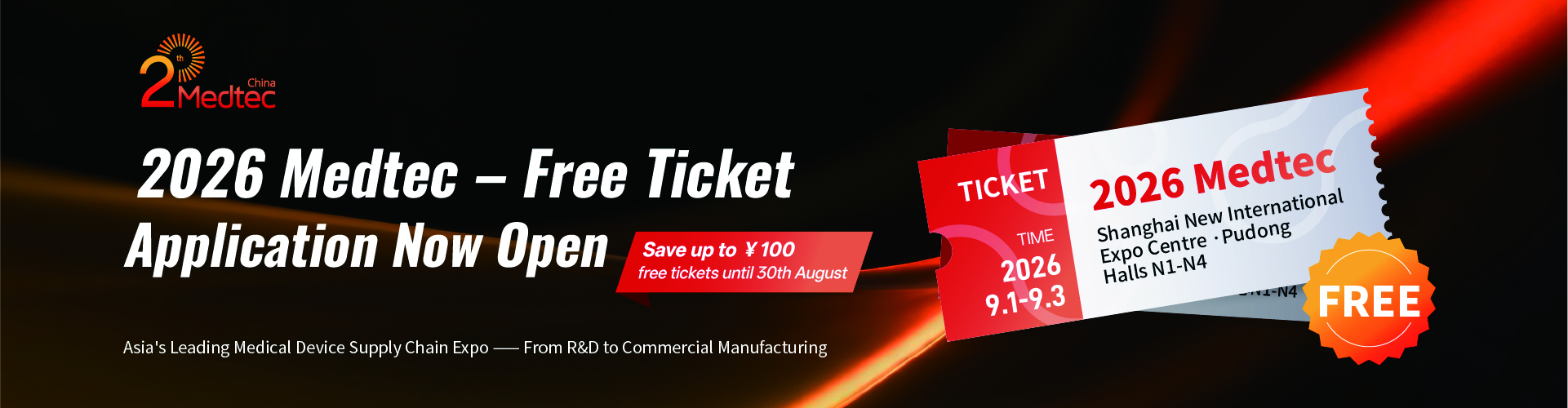
For engineers, sourcing teams, product developers, procurement managers, and suppliers working in advanced device design, the Medtec China medical expo offers a practical way to track where minimally invasive technology is heading. Positioned as a medical device design and manufacturing expo, Medtec China brings together component makers, material suppliers, contract manufacturers, equipment providers, and technical specialists across the medical device supply chain. The event takes place September 1 to 3, 2026 at Shanghai New International Expo Centre in Pudong. Visitor badge applications open from April 1, 2026, and early registration completed before August 30th is free. If your goal is to find better-fit suppliers, compare capabilities faster, and turn market insight into stronger product decisions, this is the right time to map your priorities and attend 2026 Medtec China.
Minimally invasive devices continue to push the industry toward smaller parts, tighter tolerances, cleaner materials, and more reliable manufacturing. That is why this category will draw serious attention at Medtec China Shanghai.
Why Minimally Invasive Devices Matter So Much in 2026
Minimally invasive products are not a niche area anymore. They sit at the center of many growth plans across interventional, diagnostic, surgical, and therapeutic applications.
The reason is simple. These devices aim to reduce patient trauma, shorten recovery time, and support more precise treatment. But those benefits depend on highly specialized components and manufacturing processes.
For suppliers and buyers, that raises the bar in four key areas:
- precision
- materials performance
- quality control
- scalable production
A component that looks acceptable in a standard application may fail quickly in a minimally invasive one. Small size leaves less room for variation. Tight assemblies leave less room for error. And regulatory expectations leave less room for weak documentation.
What Component Types to Expect at the Show
A strong event strategy starts with knowing which component categories deserve your time. For minimally invasive device teams, several areas are likely to stand out.
Catheters, Tubing, and Extrusions
Tubing remains one of the most important building blocks in minimally invasive systems. It can affect navigation, flexibility, flow control, and overall device behavior.
At the show, expect attention on suppliers supporting:
- single-lumen and multi-lumen tubing
- thin-wall extrusions
- reinforced catheter shafts
- heat-shrink solutions
- custom polymer extrusion
For buyers and engineers, the key issue is not only whether a supplier can produce tubing, but whether they can control consistency at the dimensions your product requires.
Guidewire and Wire-Based Components
Guidewires and related wire-based parts are critical in many minimally invasive applications. They need to balance flexibility, torque response, strength, and surface performance.
Relevant supplier capabilities may include:
- precision wire forming
- coating support
- metal processing
- shaping and tip forming
- assembly for wire-based subcomponents
This category deserves careful review because small differences in wire quality can change device performance in a major way.
Balloons, Seals, and Soft Components
Many minimally invasive devices depend on inflation, sealing, controlled contact, or flexible movement. That creates demand for soft and elastomeric components that perform reliably under stress.
Look for suppliers working in:
- medical balloons
- sealing elements
- elastomeric molded parts
- flexible connectors
- soft-touch functional components
The real question here is long-term performance, not just appearance. Samples may look good on the booth table, but you need confidence in durability, process consistency, and compatibility with the intended use.
Precision Metal and Micro Components
Minimally invasive devices often rely on very small metal parts with tight tolerances. These can include machined parts, stamped components, formed elements, and structural subassemblies.
Important areas to explore include:
- micro-machining
- precision metal fabrication
- small-scale assemblies
- laser-related processing
- components for complex delivery systems
This is a high-value category because precision errors in tiny components can create major functional problems later.
Coatings, Surface Treatments, and Bonding Solutions
Surface performance matters in minimally invasive devices. Friction, lubricity, bonding strength, and biocompatibility can all affect how a device performs during use.
Suppliers may showcase expertise in:
- functional coatings
- low-friction surface treatments
- bonding and joining support
- adhesive systems
- finishing processes for delicate components
These capabilities often deserve more attention than they get. Surface and joining performance can determine whether a device works smoothly or creates handling risk.
Why Supplier Capabilities Matter as Much as the Parts Themselves
At a medical manufacturing event, it is easy to focus on what a supplier makes. For minimally invasive devices, how they make it often matters even more.
Precision Is a Core Requirement
Smaller devices create less room for variation. That means suppliers must show real control over tolerances, dimensions, and repeatability.
Ask yourself:
- Can this supplier deliver consistency across runs?
- Do they understand critical dimensions?
- Can they support complex or delicate part requirements?
A polished part sample is useful, but process control is what protects you at scale.
Material Knowledge Shapes Product Success
Material selection is especially important in minimally invasive applications because devices may need to flex, navigate, seal, bond, or interact with tissue and fluids under demanding conditions.
Strong suppliers should be able to discuss:
- material behavior in use
- compatibility with sterilization
- performance trade-offs
- processing limitations
- documentation and traceability
If they cannot explain why a material works, not just what it is, that is a warning sign.
Quality Systems Need to Be Mature
Quality cannot be treated as a later-stage review. In minimally invasive products, small defects can have outsized impact.
Look for signs of maturity in:
- inspection discipline
- traceability
- change control
- process validation
- nonconformance handling
A supplier that answers quality questions clearly is often easier to qualify later.
Scalability Should Not Be Assumed
Some suppliers are excellent at prototypes but struggle with ramp-up. Others can scale production but are weak in early-stage collaboration.
That is why buyers should ask about:
- prototyping support
- transfer to production
- volume flexibility
- lead time stability
- capacity planning
A good fit for development is not always a good fit for commercial manufacturing.
What Buyers and Engineers Should Ask Suppliers
Booth time is limited, so your questions need to work hard. The goal is to move quickly from broad interest to practical evaluation.
Technical questions worth asking
Use direct questions such as:
- What minimally invasive applications do you support most often?
- What tolerances can you hold consistently?
- What material options do you recommend for this type of use?
- How do you handle complex geometries or thin-wall structures?
- What processing limits should we understand early?
These questions reveal whether the supplier has real category experience.
Quality and supply questions worth asking
Just as important are questions about execution:
- How do you manage traceability and change control?
- What documentation can you support during qualification?
- Can you handle both small development runs and larger production volumes?
- What is your typical lead time profile?
- How do you support customer follow-up after the first meeting?
The strength of these answers often tells you more than the marketing materials do.
How to Evaluate Fit Across Precision, Materials, Quality, and Scalability
A strong supplier for minimally invasive devices usually performs well across several areas at once. That is why a simple evaluation framework helps.
Use a four-part fit check
After each meeting, score the supplier on:
- Precision
Can they produce the required dimensions and repeatability? - Materials
Do they understand the materials and performance demands of the application? - Quality
Do they show strong process discipline and documentation readiness? - Scalability
Can they support both early development and future production needs?
This approach helps teams avoid overvaluing one strength while missing a serious weakness elsewhere.
Watch for practical signs of a strong fit
Promising suppliers often show:
- specific answers instead of general claims
- familiarity with medical applications
- clear understanding of manufacturing constraints
- confidence in quality processes
- a realistic next-step mindset
Weak-fit suppliers often sound broad, vague, or overly eager without offering proof.
How to Make the Most of the Show Floor
To stay productive, keep your event plan focused.
Before the event
- identify the component categories tied to active projects
- align engineering, sourcing, and quality on must-ask questions
- shortlist priority suppliers when possible
During the event
- compare similar suppliers close together
- record key strengths and concerns right after meetings
- revisit high-potential booths for deeper discussion
After the event
- rank suppliers by fit and urgency
- assign follow-up owners quickly
- move strong contacts into sample, RFQ, or review steps
Conclusion
Minimally invasive device components will be one of the most important areas to watch at Medtec China 2026 because they sit at the intersection of precision engineering, material performance, quality discipline, and manufacturing scale. For engineers, sourcing teams, procurement managers, and suppliers, the best outcomes will come from treating the event as a focused evaluation opportunity, not just a broad market tour. Prioritize the component categories that matter most to your programs, ask sharper questions, and assess each supplier through the lens of precision, materials, quality, and scalability. That is how a busy expo becomes a real advantage in minimally invasive device development and sourcing.