
For procurement teams and technical buyers looking ahead to their next supplier search, 2026 Medtec China offers a focused view of where medical device manufacturing is heading. Positioned as a medical device design and manufacturing expo, the event brings together component suppliers, material specialists, contract manufacturers, equipment providers, and service partners across the device supply chain.
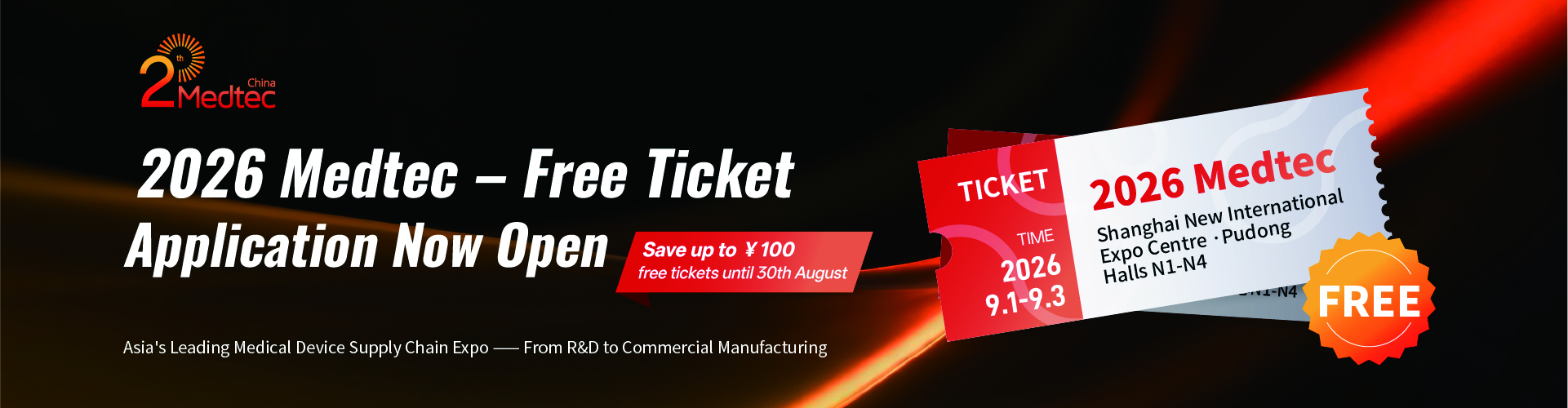
It will take place September 1 to 3, 2026 at Shanghai New International Expo Centre in Pudong. Visitor badge applications open from April 1, 2026, and early registration completed before August 30th is free. If your goal is to find stronger suppliers, compare capabilities faster, and make better sourcing decisions with less guesswork, this is a smart time to plan your agenda and visit Medtec China exhibition!
Why Buyers Should Take a Category-First View
A large expo can quickly become overwhelming. If you try to see everything, you usually leave with too little depth where it matters most. A better approach is to watch the component categories most likely to shape sourcing decisions in the year ahead.
That matters because buyers in 2026 are not just comparing price. They are also weighing:
- supply continuity
- quality maturity
- technical fit
- speed to qualification
- scalability
- compliance support
At Medtec China 2026, the categories that draw the most attention will likely be the ones tied to product reliability, cost pressure, manufacturing flexibility, and regulatory expectations.
Component Categories Buyers Should Watch Closely
Some categories deserve extra attention because they affect more than one part of the business. They influence design choices, supply risk, manufacturing efficiency, and launch readiness.
Materials and Polymers
Medical-grade materials will remain a high-interest area in 2026 because they sit at the base of both performance and compliance. Buyers and engineers will be looking closely at polymers, specialty resins, films, tubing materials, adhesives, and related inputs.
Why this category matters:
- material choice affects device function and durability
- upstream supply stability can influence lead times
- documentation requirements continue to matter in regulated markets
- material alternatives may support cost reduction or redesign efforts
Key sourcing questions to ask:
- What medical applications do you support most often?
- How stable is your raw material supply?
- What documentation is available for traceability and compliance?
- Can you support both standard and custom requirements?
Precision Components
Precision-machined parts, molded components, stamped parts, and micro-scale features are likely to stay under the spotlight. As devices become smaller, lighter, and more specialized, buyers need suppliers that can deliver repeatability, tight tolerances, and process control.
Why this category matters:
- precision directly affects device performance
- poor repeatability can create downstream quality issues
- supplier capability often separates strong programs from costly delays
Key sourcing questions to ask:
- What tolerances can you hold consistently?
- What process controls are in place?
- Can you support prototyping as well as production?
- What similar medical applications have you handled?
Tubing, Extrusions, and Fluid Path Components
This category remains highly relevant across many medical device types, especially in disposables, diagnostic systems, minimally invasive devices, and fluid management applications.
Buyers should watch for suppliers offering:
- medical tubing
- extrusions
- connectors
- valves
- filters
- custom flow-related components
Why this category matters in 2026:
- fluid path reliability is critical in many device categories
- customization needs are often high
- material compatibility and performance remain central buying issues
Questions worth asking:
- What customization options do you offer?
- How do you validate consistency across runs?
- What sterilization or chemical compatibility data can you support?
- How do you handle dimensional variation?
Packaging and Sterile Barrier Components
Packaging is often treated as a late-stage concern, but experienced buyers know better. Packaging components can affect shelf life, transport protection, sterilization compatibility, and regulatory readiness.
Why this category deserves attention:
- packaging failures can create major product risk
- product launch plans often depend on validated packaging systems
- packaging choices can affect logistics cost and product presentation
Ask suppliers:
- What medical packaging formats do you support?
- How do you approach validation and consistency?
- What cleanroom or controlled-environment capabilities do you have?
- Can your packaging scale with volume growth?
Electronic and Sensor-Related Components
As more medical devices integrate connectivity, monitoring, and smart features, electronic components and sensor-related suppliers will likely receive stronger buyer attention.
This may include:
- sensing elements
- small electronic assemblies
- connectors
- power-related components
- interface elements
Why buyers should watch this area:
- digital functionality is expanding across device categories
- supplier quality and reliability are critical
- integration demands often raise the bar for technical discussions
Useful questions include:
- What quality controls apply to your electronic processes?
- How do you manage change control?
- What is your experience with medical applications?
- How do you support long-term supply continuity?
Why These Categories Matter More in 2026
Not every year highlights the same sourcing priorities. In 2026, buyers are likely to focus on categories that help solve a few recurring pressures.
Supply Chain Resilience Still Matters
Teams want suppliers that can deliver consistently, communicate clearly, and support continuity planning. Categories tied to critical components will naturally attract more attention because weak sourcing here creates bigger downstream risk.
Technical Demands Are Rising
Devices are becoming more specialized. That increases demand for suppliers that can support tighter tolerances, better materials performance, cleaner documentation, and stronger engineering support.
Qualification Speed Is a Competitive Advantage
The faster a buyer can identify a credible supplier, the faster the business can move. Categories with high impact on performance or compliance will stay under closer review because qualification errors there cost more later.
How to Assess Supplier Fit by Category
A strong supplier in one category may not be strong in another. That is why fit should be assessed in context, not through a generic checklist alone.
For Material Suppliers
Look for:
- stable sourcing of raw inputs
- application knowledge
- documentation readiness
- consistency across batches
For Precision Part Suppliers
Focus on:
- process capability
- repeatability
- tooling and prototyping support
- inspection discipline
For Packaging Suppliers
Evaluate:
- validation support
- cleanroom controls
- scalability
- compatibility with sterilization and shipping needs
For Electronics-Related Suppliers
Prioritize:
- process control
- product reliability
- lifecycle planning
- change management discipline
A practical rule helps here: ask each supplier to explain not only what they make, but how they control quality, support scale, and manage change.
How to Prioritize Your Time on the Show Floor
A buyer’s preview is only useful if it leads to a better show plan. The goal is not to cover every booth. The goal is to spend time where your current business needs are strongest.
Start With Your Top Two Business Priorities
Before the event, define what matters most. For example:
- find a new source for a current component
- compare backup suppliers in a risk-sensitive category
- explore better-fit materials for a redesign
- identify suppliers that can support future product growth
These priorities should guide your route.
Rank Categories by Urgency
Use a simple three-level model:
High priority
- tied to active sourcing decisions
- important to quality or compliance
- difficult to replace quickly
Medium priority
- relevant to upcoming projects
- useful for benchmarking
- possible second-source options
Lower priority
- future-looking exploration
- trend monitoring
- broad market learning
Use Short Meeting Filters
To stay efficient, score each supplier quickly after speaking with them:
- strong fit
- possible fit
- no fit
Capture a few basics:
- category
- main capability
- key concern
- next step
That small habit makes post-show follow-up much easier.
Smart Planning Tips Before You Attend
To get more value from the event, keep your preparation simple and practical.
Before the show
- shortlist the categories that matter most
- define your key questions by category
- align procurement, engineering, and quality on meeting goals
- pre-book meetings with high-priority suppliers
During the show
- start with your highest-value categories
- leave room for second visits to strong-fit booths
- compare suppliers within the same category on the same day
- record notes right after each conversation
After the show
- rank suppliers by urgency and fit
- assign follow-up owners
- move quickly on the most promising contacts
Conclusion
The most useful buyer’s preview is one that sharpens action. At Medtec China 2026, the component categories likely to draw the most attention include materials and polymers, precision components, tubing and fluid path parts, packaging and sterile barrier solutions, and electronic or sensor-related components. These areas matter because they touch product performance, supply continuity, qualification speed, and compliance risk. If you want stronger results from the event, plan by category, ask better sourcing questions, and focus your time on suppliers tied to real business priorities. That is how a busy show floor becomes a practical sourcing advantage.