
Evaluating technical capabilities across complex supply chains requires systematic assessment frameworks during physical exhibition walkthroughs. Held each September across Halls N1 through N4 at the Shanghai New International Expo Center, our premier gathering serves as a vital bridge between international device developers and component suppliers. Representing Medtec China, our team curates an immersive industrial venue where cross-functional delegates inspect advanced raw materials, examine precision machinery, and explore contract assembly capabilities.
Navigating a full-scale Medtec China Exhibition enables purchasing departments and R&D managers to streamline supplier qualification, verify cleanroom standards, and reduce commercialization delays. International delegates are invited to register on our official site today to stay tuned for the 2027 Corporate Delegation Guidelines and organize their upcoming trip to Shanghai.
Pre-Auditing Protocols and Vendor Filtering Matrixes
Formulating precise evaluation metrics prior to visiting exhibition stands prevents fragmented feedback and optimizes time allocation across busy exhibition floors. Sourcing teams gain immense efficiency by categorizing component criteria into core material grades, precision tolerance limits, and volume scalability parameters before engaging vendor representatives. Preparing standardized specification sheets ensures that initial technical discussions remain tightly focused on manufacturing feasibility rather than generic company introductions.
Reserving dedicated consultation slots with key component suppliers well in advance guarantees structured technical exchanges during peak exhibition hours. Group leaders should compile secure digital packages containing CAD files, target tolerances, and preliminary non-disclosure agreements to share during booth visits. Balancing pre-arranged meetings with open floor exploration creates valuable opportunities to uncover unexpected fabrication solutions.
Establishing objective evaluation scorecards allows multi-disciplinary teams to assess vendor qualifications systematically across multiple functional criteria. Technical delegates ought to scrutinize suppliers based on cleanroom classifications, ISO 13485 compliance, and batch-level material traceability systems. Shared scoring frameworks simplify post-event vendor comparisons and accelerate final qualification decisions.
In-Person Inspection Strategies for Production Equipment
Observing live machinery demonstrations offers technical groups unique insights into equipment stability, cycle speeds, and automated handling accuracy. Multi-axis Swiss CNC turning centers, micro-EDM units, and laser welding modules showcase their operational repeatability under real-world cleanroom conditions. Evaluating spindle thermal stability and vibration dampening during active cutting routines helps engineers gauge long-term part consistency.
Visiting a specialized medical trade show booth gives corporate sourcing delegations direct exposure to high-precision liquid silicone rubber (LSR) molding cells, automated micro-dispensing modules, and vision-guided robotic inspection systems operating in real time. Micro-dispensing valves deliver minute droplets of UV-curable adhesive onto delicate electrical contacts with extreme accuracy and zero air entrapment. Watching these automated demonstration platforms live assists process engineers in assessing cycle time improvements and planning cleanroom floor integration.
Inline optical metrology systems integrated directly alongside production cells provide instantaneous dimensional feedback without interrupting automated workflows. High-speed multi-camera arrays capture detailed part profiles, identifying microscopic burrs, flash, or dimensional drift in fractions of a second. Implementing automated vision inspection safeguards continuous high-volume production schedules against costly quality failures.
Bio-Compatible Material Verification and Testing Standards
Selecting raw polymers or specialty alloys demands thorough verification of chemical purity, mechanical endurance, and biostability under rigorous clinical conditions. High-performance materials like implant-grade PEEK, ultra-high-molecular-weight polyethylene, and fluoropolymers frequently replace conventional metal hardware, reducing component weight while improving radiolucency. Technical teams analyze stress-strain behavior and chemical degradation kinetics to confirm long-term biological safety.
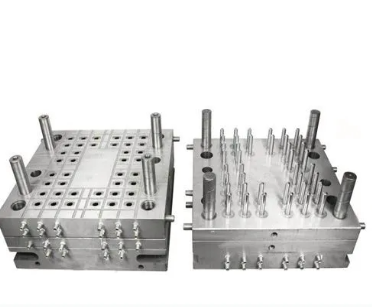
Polymer viscosity variations during high-cavity precision injection molding can introduce internal stresses or microscopic voids in thin-walled components. Conducting pre-production mold flow simulations allows mold designers to optimize gate placements, runner channels, and cooling profiles before cutting expensive steel tooling. Establishing stable processing parameters early prevents costly mold re-work during pilot production phases.
Surface functionalization strategies offer additional methods to enhance substrate performance without altering core mechanical properties. Hydrophilic polymer coatings reduce surface friction along vascular access pathways, while plasma surface activation enhances bonding strength for multi-layer tubing. Investigating these surface modification options enables development teams to enhance functional safety across diverse device lines.
Regulatory Consistency and Risk Mitigation Frameworks
Navigating international regulatory approval pathways demands complete material traceability from raw chemical synthesis down to final sterile barrier packaging. Equipment manufacturers must verify that component suppliers hold valid ISO certifications, maintain complete device master files, and follow strict change-control procedures. Establishing clear quality agreements upfront prevents unexpected compliance delays during regulatory submissions.
Biocompatibility evaluation frameworks increasingly emphasize comprehensive chemical characterization over traditional animal testing protocols. Extractables and leachables testing provides quantitative measurements regarding potential compound migration under aggressive solvent conditions. Conducting thorough chemical risk assessments early clarifies regulatory steps prior to clinical trials.
Risk mitigation planning should balance physical component performance against potential supply chain disruptions. Relying on single-source vendor networks exposes manufacturing operations to sudden material shortages or global freight bottlenecks. Cultivating qualified secondary suppliers for critical sub-assemblies maintains operational stability during market shifts.
Conclusion
Structuring booth evaluations, inspecting advanced production tools, and verifying supplier compliance demand structured planning and direct industry engagement. Operating as Medtec China, our team remains dedicated to hosting a premier global venue where technical delegates, material innovators, and contract manufacturers connect to drive healthcare technology forward.
Gathering each autumn at the Shanghai New International Expo Center, our Medtec China Exhibition platform gives delegates direct access to novel materials, cleanroom automation, and specialized technical sessions. Organize your group’s visit early, establish key supplier meetings, and refine your technology sourcing strategy; explore our official portal today to review delegation guidelines, check conference schedules, and plan your Shanghai itinerary.