
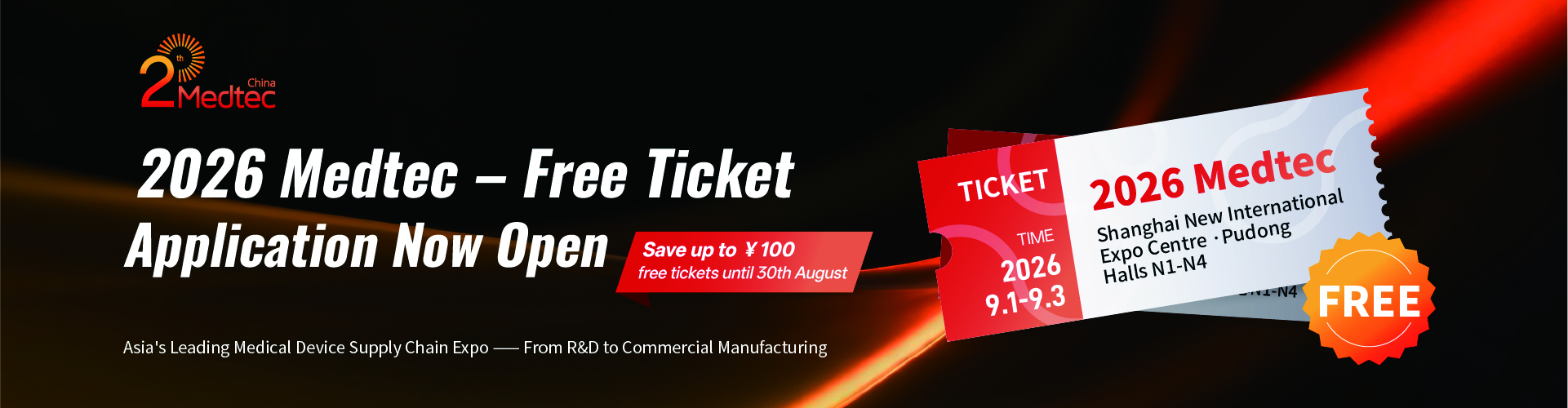
If you are tracking the 2026 medical device market, the Medtec China exhibition is one of the clearest places to see where supply chains are heading next. Positioned as a specialized exhibition for medical device R&D and manufacturing, it brings together materials suppliers, component makers, automation providers, quality experts, and manufacturing partners across the full ecosystem. The 2026 event takes place September 1–3, 2026, at SNIEC N1–N4 in Shanghai. Visitors can pre-register for free before August 30, while onsite entry requires a paid ticket. If you want to make smarter sourcing, operations, and innovation decisions for the year ahead, explore Medtec early and get your visitor pass so you can turn market signals into practical action.
Why 2026 Feels Different for Medical Device Supply Chains
Medical device supply chains are no longer judged on cost alone. In 2026, buyers, manufacturers, and product teams are under pressure to deliver speed, reliability, compliance, and innovation at the same time.
That shift is changing how companies evaluate partners. A supplier that once looked attractive because of price may now fall short if it lacks traceability, technical depth, or regional flexibility. At the same time, a more advanced supplier may win business by helping reduce risk, improve yields, or support faster regulatory readiness.
For sourcing and operations teams, the question is no longer just, “Who can make this part?” It is now, “Who can help us build a stronger, smarter, and more adaptable supply chain?”
Trend 1: Resilience Is Now a Core Buying Standard
Resilience has moved from a nice-to-have idea to a real sourcing requirement. Many medical device companies now evaluate suppliers based on how well they can keep production moving through disruption.
That includes resilience against:
- Logistics delays
- Raw material volatility
- Geopolitical shifts
- Capacity bottlenecks
- Quality interruptions
- Regulatory changes
This does not mean companies are abandoning efficiency. It means they are balancing efficiency with continuity.
What resilience looks like in practice
Buyers increasingly want suppliers that can show:
- Stable sourcing for key inputs
- Clear business continuity planning
- Backup production options
- Strong change control processes
- Consistent communication during disruptions
In other words, reliability is becoming part of the product offer itself.
Trend 2: Regionalization Is Reshaping Supplier Strategy
Global sourcing is still important, but regionalization is gaining ground. Companies want supply chains that are global enough to stay competitive and regional enough to reduce exposure.
For many medical device manufacturers, that means:
- Building supplier networks closer to target markets
- Using China strategically for manufacturing depth and scale
- Creating dual-region or multi-region sourcing models
- Reducing dependence on a single geography for critical parts
This is not a retreat from globalization. It is a more selective version of it.
Why regionalization matters in 2026
Regionalization helps companies improve:
- Lead time control
- Supply security
- Market responsiveness
- Cross-border risk management
- Customer confidence in continuity planning
For teams attending international expos, this makes supplier evaluation more strategic. You are not only comparing capabilities. You are also comparing how a supplier fits into your wider network design.
Trend 3: Automation Is Moving From Efficiency Tool to Growth Driver
Automation is no longer just about lowering labor cost. In 2026, it is increasingly tied to quality, consistency, scalability, and speed.
Medical device manufacturers are looking at automation as a way to:
- Improve repeatability
- Reduce manual error
- support higher output with tighter control
- Strengthen traceability
- Manage labor constraints
This matters across both high-volume and complex manufacturing environments.
Where automation is creating the most value
You are likely to see strong interest in areas such as:
- Robotic handling and assembly
- Vision inspection systems
- Smart production monitoring
- Precision process control
- Automated packaging and labeling
- Digital quality tracking
For sourcing teams, automation signals more than technical sophistication. It can also suggest a supplier is investing for long-term partnership, not just short-term volume.
Trend 4: Material Innovation Is Becoming a Competitive Lever
Material choice is playing a larger role in product performance, manufacturability, and compliance. That is why material innovation is becoming a bigger part of supply chain strategy.
Manufacturers are looking for materials that can help them achieve goals such as:
- Better durability
- Improved biocompatibility
- Lighter designs
- More stable processing
- Stronger sterilization compatibility
- Better performance in miniaturized devices
This affects both R&D and sourcing decisions.
Why buyers should pay attention
A strong material partner may help solve issues earlier in the development cycle, before they become expensive production problems.
Key areas to watch include:
- Medical-grade polymers and composites
- Advanced ceramics and glass-related materials
- Specialty adhesives and bonding solutions
- Tubing innovations
- Materials for active device applications
In 2026, material suppliers are not just vendors. Increasingly, they are technical contributors.
Trend 5: Compliance Pressure Is Expanding Beyond Final Product Approval
Compliance is no longer viewed only through the lens of final product submission. It is shaping supplier expectations much earlier in the chain.
Medical device companies now need suppliers that understand the demands around:
- Documentation quality
- Traceability
- Process validation support
- Clean manufacturing practices
- Inspection discipline
- Change notification and control
This creates pressure on both large and smaller suppliers to become more mature operationally.
What this means for supplier selection
A supplier may offer a competitive quote, but if its documentation is weak or its quality systems are inconsistent, the real cost can rise quickly.
That is why buyers are asking harder questions about:
- Quality management systems
- Inspection methods
- Batch and lot traceability
- CAPA responsiveness
- Regulatory support capabilities
In 2026, compliance readiness is becoming part of commercial value.
Trend 6: Supplier Transparency Is Gaining Real Weight
Transparency used to be treated as a relationship benefit. Now it is becoming a sourcing requirement.
Buyers want clearer visibility into:
- Where materials come from
- How production risk is managed
- What causes lead time changes
- How quality issues are escalated
- What subcontracting is involved
This is partly about risk control and partly about trust. When supply chains are under pressure, unclear communication creates delay and weakens decision-making.
Signals of a transparent supplier
Look for suppliers that can discuss:
- Process flow clearly
- Quality controls with confidence
- Capacity limits honestly
- Escalation procedures directly
- Timelines without vague promises
Transparency does not mean perfection. It means clarity.
Trend 7: Cost-Performance Tradeoffs Are Getting More Sophisticated
Cost pressure remains real, but the lowest quote is often the least useful benchmark. In 2026, more companies are assessing cost in relation to performance, risk, and long-term value.
A cheaper option may become more expensive if it brings:
- Higher defect rates
- Slower communication
- Longer validation cycles
- Missed delivery windows
- Greater compliance burden
- More engineering rework
That is why supplier decisions are becoming more total-cost focused.
A smarter way to compare suppliers
Instead of asking only, “What is the unit price?” teams should also ask:
- What quality risk comes with this quote?
- How much support will we need after award?
- Can this supplier scale with us?
- Will this choice improve or weaken speed to market?
- How well does this partner fit our future manufacturing model?
That broader view leads to better decisions.
What These Trends Mean for 2026 Planning
For sourcing, operations, and innovation teams, these trends point to one clear reality: supplier selection is becoming more strategic, more cross-functional, and more future-focused.
The strongest 2026 decisions will likely come from companies that:
- Review supplier networks, not just individual quotes
- Balance cost with resilience and compliance
- Treat automation and materials as strategic inputs
- Ask for more transparency earlier
- Use industry events to compare capabilities in real time
That matters because the companies that adapt faster will be better positioned to manage both risk and growth.
Final Thoughts
International medical expos are becoming more than product showcases. They are live maps of how the industry is changing. In 2026, the most important supply chain trends are not isolated themes. They are connected: resilience supports continuity, regionalization reduces exposure, automation improves control, material innovation drives performance, compliance shapes partner quality, transparency builds trust, and better cost-performance thinking improves long-term results. If you are planning next year’s sourcing or manufacturing strategy, now is the time to study those signals closely and act on them with intent.