
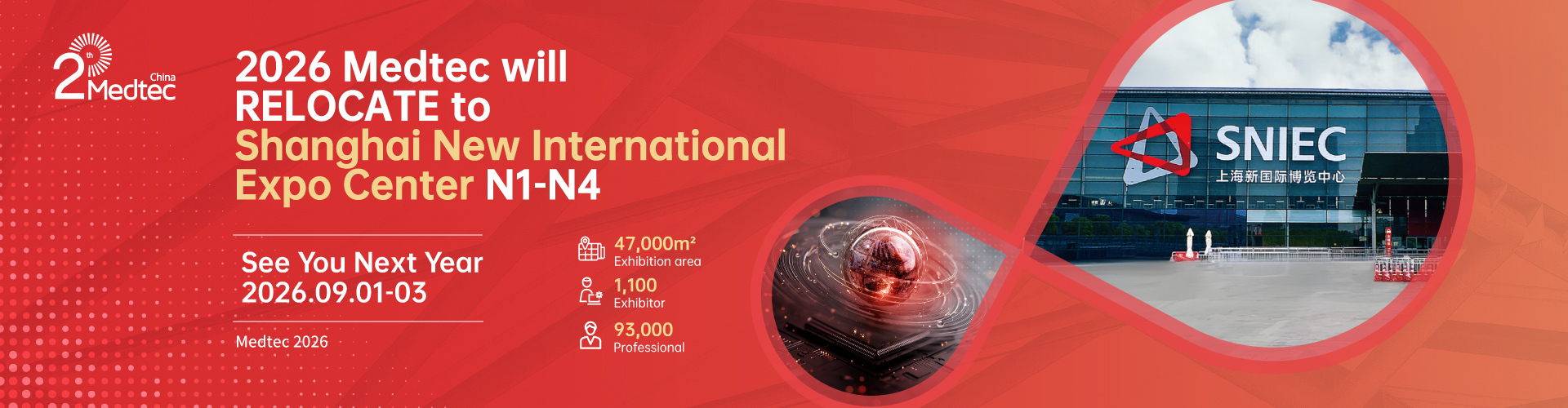
Developing a medical device requires coordinated decisions across materials, engineering, manufacturing, quality, and commercialization. That is why we designed Medtec China as a supply-chain-focused platform rather than a showcase for finished devices. From September 1–3, 2026, we will bring medical device professionals together at the Shanghai New International Expo Centre, with solutions spanning R&D through commercial manufacturing. Our key advantage is the ability to help visitors explore connected technologies and suppliers across the development lifecycle in one venue. International attendees can register for a visitor badge and begin planning a stage-based visit through our official event platform.
A productive exhibition visit starts with a clear understanding of where your product stands. A concept-stage team does not need the same suppliers as a company preparing for high-volume production. By matching your agenda to development milestones, you can spend less time navigating unrelated exhibits and more time evaluating technologies that support your next decision.
Start With a Product Development Map
Before arriving, divide your project into practical stages: concept definition, feasibility, design and prototyping, verification, process development, production scale-up, and post-launch improvement. Then identify the technical gaps, supplier needs, and risks associated with each stage.
For example, an early-stage team may need help selecting materials or assessing whether a complex geometry can be manufactured. A later-stage team may prioritize automation, process consistency, packaging, testing, or contract manufacturing capacity. This simple map turns an exhibition from a general networking event into a targeted sourcing exercise.
We recommend assigning a priority level to every requirement. Mark essential technologies as “must visit,” useful alternatives as “should visit,” and emerging ideas as “explore if time allows.” This approach helps teams protect time for critical supplier discussions while remaining open to innovation.
Using a Medical Technology Expo for Concept and Feasibility
At the concept stage, the goal is not to finalize every component. The priority is to understand what is technically possible and identify constraints before they become expensive redesign issues. A well-planned medical technology expo visit can connect product teams with specialists in materials, components, engineering, and manufacturing processes.
Start by discussing the intended clinical application, operating environment, target dimensions, and performance expectations. Ask suppliers which material properties or production methods may affect feasibility. Early conversations can reveal concerns involving strength, flexibility, chemical compatibility, surface performance, miniaturization, or assembly.
Visitors should also compare multiple technical routes rather than relying on a single solution. For example, a component may be produced through machining, molding, laser processing, or additive manufacturing, depending on its geometry, volume, tolerance requirements, and development timeline.
At this stage, avoid requesting only a price quotation. Ask what information a supplier needs to assess feasibility and what design changes could simplify production. These discussions can provide useful direction before detailed engineering work begins.
Navigate Materials and Components During Early Design
Once the concept becomes more defined, material selection and component integration become increasingly important. We provide access to areas covering metallic materials and components, advanced ceramic, biological and glass materials, medical-grade polymers, composite materials, specialty adhesives, tubing, and related technologies.
Prepare a technical brief before meeting suppliers. Include the intended use, expected loading, environmental conditions, dimensional targets, joining requirements, and relevant performance expectations. A concise brief allows exhibitors to give more useful feedback than a general description of the device.
Design teams should ask whether materials are available in suitable grades and forms, whether supply continuity can support future production, and whether processing could alter critical properties. It is also useful to discuss documentation, traceability, and the supplier’s experience with medical applications.
When evaluating components, consider the complete assembly rather than each part in isolation. Interfaces between tubing, connectors, adhesives, sensors, electronics, and housings may create risks that are not visible when individual components are reviewed separately.
Move From Prototype to Design Verification
During the prototyping stage, speed matters, but repeatability matters as well. A prototype that demonstrates a concept may not represent the behavior of a production-ready device. We encourage visitors to ask suppliers how prototype methods compare with the processes intended for commercial manufacturing.
Precision manufacturing and processing resources at the exhibition include technologies such as super-precision laser processing, CNC machine tools, additive manufacturing, molding services and equipment, tubing and extrusion equipment, and surface-treatment solutions.
When reviewing prototypes, ask about achievable tolerances, surface characteristics, dimensional consistency, inspection methods, and expected process limitations. If a supplier proposes a temporary manufacturing route, clarify what changes may be required before production.
Design verification planning should also begin early. Teams can explore testing equipment, metrology instruments, inspection technologies, and quality-assurance resources to understand how critical requirements may be measured and controlled.
Use the Medical Technology Expo for Manufacturing Readiness
As a project approaches manufacturing readiness, supplier evaluation becomes more operational. A medical technology expo can help teams compare production capabilities, integration expertise, automation options, and the ability to support scale-up.
Prepare questions about capacity, process control, quality systems, change management, engineering support, and communication practices. If your device includes several specialized processes, determine whether one partner can manage integration or whether a qualified supplier network will be required.
Our OEM/ODM, automation, and smart-factory area covers full-service contract manufacturing, medical integration and automation, drive control, robotics, and smart manufacturing solutions. These resources are particularly relevant when teams need to move from engineering builds to stable, repeatable production.
Do not evaluate manufacturing partners solely by equipment lists. Ask how they manage process development, production transfer, nonconforming output, and technical changes. The quality of collaboration may be as important as the machinery on the factory floor.
Plan for Packaging, Sterilization, and Quality
Packaging and sterilization should not be treated as final-stage tasks. Package design can affect product protection, shelf-life strategy, labeling, transportation, and manufacturing workflow. Early engagement with packaging specialists can help prevent late changes that disrupt schedules.
At the exhibition, visitors can explore medical packaging, sterilization technologies, labeling systems, cleanroom equipment, and related solutions. Bring information about device geometry, material sensitivity, handling requirements, and intended distribution conditions to make supplier discussions more specific.
Quality planning should progress alongside design and manufacturing development. Testing, metrology, inspection, and quality resources can support conversations about measurement capability, process monitoring, and inspection strategies.
For each potential supplier, record not only what technology is available but also what evidence, documentation, and technical support may be provided. A structured comparison is more useful than collecting brochures without clear evaluation criteria.
Build a Cross-Functional Visit Schedule
Medical device development is multidisciplinary, so exhibition planning should involve more than procurement. We recommend including representatives from engineering, R&D, manufacturing, quality, regulatory, and supply-chain functions whenever possible.
Each participant should have defined objectives. Engineers may focus on design feasibility and process capability, while procurement teams evaluate supplier fit and supply continuity. Quality professionals may examine inspection methods and control strategies, and regulatory specialists may identify documentation or compliance questions.
Schedule high-priority meetings in advance, but leave time for discovery. Some of the most valuable opportunities may come from adjacent technologies that solve a problem in an unexpected way. A balanced schedule combines planned supplier discussions with focused exploration.
After every meeting, record the supplier’s capabilities, technical observations, follow-up actions, and unanswered questions. This prevents useful information from being lost when the team meets many exhibitors in one day.
Turn Exhibition Insights Into Development Actions
The value of an exhibition visit depends on what happens afterward. Within a few days, consolidate notes and compare suppliers against the same criteria. Separate immediate project opportunities from longer-term technology ideas.
Create a follow-up list that identifies required samples, technical drawings, feasibility reviews, quotations, or additional meetings. Assign an owner and deadline to each action. This transforms exhibition conversations into measurable development progress.
Teams should also review whether new supplier information changes the product-development plan. A newly discovered material, manufacturing method, or integration partner may reduce technical risk, shorten development time, or improve scalability.
Navigate the Full Development Journey With Confidence
From September 1–3, 2026, we invite international medical device professionals to the Shanghai New International Expo Centre to explore a platform dedicated to medical device R&D, design, manufacturing, and supply-chain collaboration.
Medtec China brings together resources ranging from raw materials and precision processing to OEM/ODM services, automation, packaging, cleanroom technologies, testing, and quality solutions, helping visitors connect each development stage with relevant expertise.
Discover how evolving technologies are creating new possibilities for medical device development and manufacturing at Medtec China 2026. Pre-register now to claim your complimentary ticket and connect with the professionals behind these innovations.