
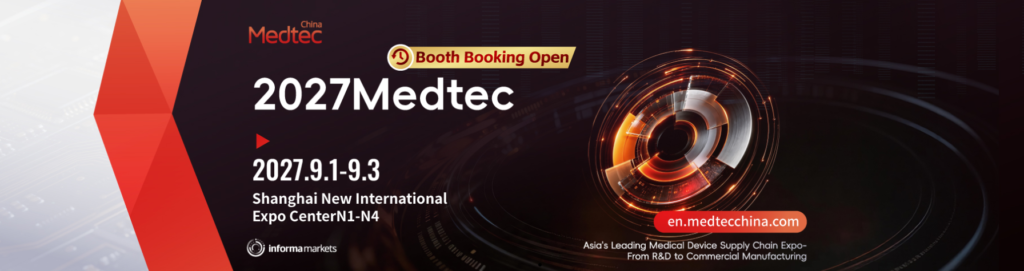
Shanghai becomes a particularly useful meeting point for international medical device teams on September 1–3, 2027, when Medtec China brings medical device R&D, manufacturing, materials, components, testing, and related technologies together at the Shanghai New International Expo Center (SNIEC), Halls N1–N4.
We design the event around the upstream side of the industry, so visitors can study technologies and supplier capabilities rather than simply view finished devices. If your delegation is planning its schedule around a medical device development expo, register early and explore the official visitor information before arranging meetings and travel.
Map the Venue Before Your Meetings
SNIEC covers several interconnected exhibition halls, making a simple map review surprisingly useful before arrival. N1 and N2 concentrate heavily on materials, components, precision processing, tubing, IVD-related technologies, and other upstream resources, while N3 and N4 extend into manufacturing services, automation, packaging, sterilization, cleanroom technologies, design, software, testing, and regulatory services. A visitor who understands these divisions can reduce unnecessary walking between unrelated areas.
Metro planning is equally straightforward. Huamu Road Station on Shanghai Metro Line 7 provides a practical public-transport connection to the venue, making the subway particularly useful for visitors staying in central Shanghai. Taxi travel may be more convenient for teams carrying samples, technical documents, or several bags, although road conditions can affect journey times considerably. Building some flexibility into the morning schedule is sensible, especially for meetings with fixed appointment windows.
Hotel selection should be based on the purpose of the trip rather than distance alone. Teams with several early meetings may prefer accommodation with a simple route to SNIEC, while delegations combining exhibition visits with supplier dinners or city appointments might prioritize access to broader transport connections. A practical Shanghai expo travel guide should also account for the return journey each evening, because a hotel that saves ten minutes in the morning may create a much longer trip after a full day of meetings.
Match Travel Plans With Supply-Chain Priorities
The physical layout can support a more efficient sourcing strategy. A team investigating polymers, composites, metals, ceramics, tubing, adhesives, or component technologies can concentrate its first visits in N1 and N2. Those categories are closely connected to device architecture, so technical teams can examine how material properties, component dimensions, processing methods, and downstream requirements interact before moving toward manufacturing services.
N3 becomes particularly relevant once a project moves from component evaluation toward production. Its scope includes molding, extrusion equipment, surface treatment, OEM/ODM manufacturing, medical integration, automation, robotics, drive control, and smart-factory technologies. For an international delegation, this creates an opportunity to compare not only individual production capabilities but also how suppliers might fit into a broader manufacturing workflow.
N4 covers another part of the development chain that can easily be overlooked during short business trips. Packaging, sterilization, labeling, cleanroom technologies, R&D design, software, consulting, testing, metrology, and inspection all influence how a device moves from prototype work toward controlled production. At a medical device development expo, reserving time for these supporting disciplines can reveal requirements that may otherwise surface much later in a project.
Build a Practical Three-Day Itinerary
A three-day visit works better when each day has a different purpose. The first morning can focus on orientation and high-priority supplier meetings, while the afternoon allows additional technical discussions. The second day can be reserved for deeper manufacturing and component comparisons, with enough space between appointments to accommodate longer conversations. The final day can focus on follow-up meetings, unresolved technical questions, and areas that deserve a second look.
International teams should also distinguish between meetings that require detailed preparation and exploratory conversations that do not. A material-development discussion may need drawings, specifications, target performance ranges, and regulatory requirements, whereas an initial conversation with a testing or automation provider may begin with the device category and development stage. Separating these meeting types prevents every appointment from becoming overloaded with technical documentation.
Travel time should be treated as part of the agenda rather than an afterthought. Shanghai traffic can change road-based journey times, while subway travel provides a more predictable alternative on suitable routes. For teams staying farther from SNIEC, grouping meetings by hall or technology category can reduce repeated journeys across the city and preserve more working time during the exhibition.
Prepare for Technical Conversations Beyond the Show Floor
A productive exhibition visit depends on the questions prepared before arrival. Instead of asking only about price or production capacity, teams can investigate material grades, dimensional tolerances, processing methods, validation support, quality systems, tooling arrangements, minimum order requirements, prototype capability, and expected development timelines. These questions create a more useful basis for comparing potential supply-chain partners.
Documentation also matters. A concise project brief can include the device application, major components, target markets, development phase, required certifications, expected annual volume, and current manufacturing challenges. Sharing only the information necessary for an initial technical discussion allows suppliers to understand the project without turning the first conversation into a full design review.
The same principle applies to post-meeting records. Teams can classify contacts by technology area, development relevance, technical fit, follow-up priority, and required internal review. This creates a structured reference after returning home, especially when many suppliers offer related materials or manufacturing processes. The value of an international exhibition often depends on how clearly those observations are organized afterward.
Conclusion
From September 1–3, 2027, Medtec China will bring its medical device R&D and manufacturing focus to SNIEC N1–N4 in Shanghai, creating a concentrated setting for international professionals to explore materials, components, production technologies, automation, testing, packaging, design, and other parts of the medical-device supply chain. We at Medtec China encourage international visitors to combine venue planning with a clear technical agenda, practical transport arrangements, and focused supplier research. If your next trip includes a Shanghai expo travel guide requirement, review the event information, plan your route, and register to prepare for a more productive visit.