
A catheter system may appear to be a finished medical device, but its performance depends on a network of specialized components working together. Tubing, connectors, coatings, reinforcement structures, and other precision parts all contribute to the reliability of the final product.
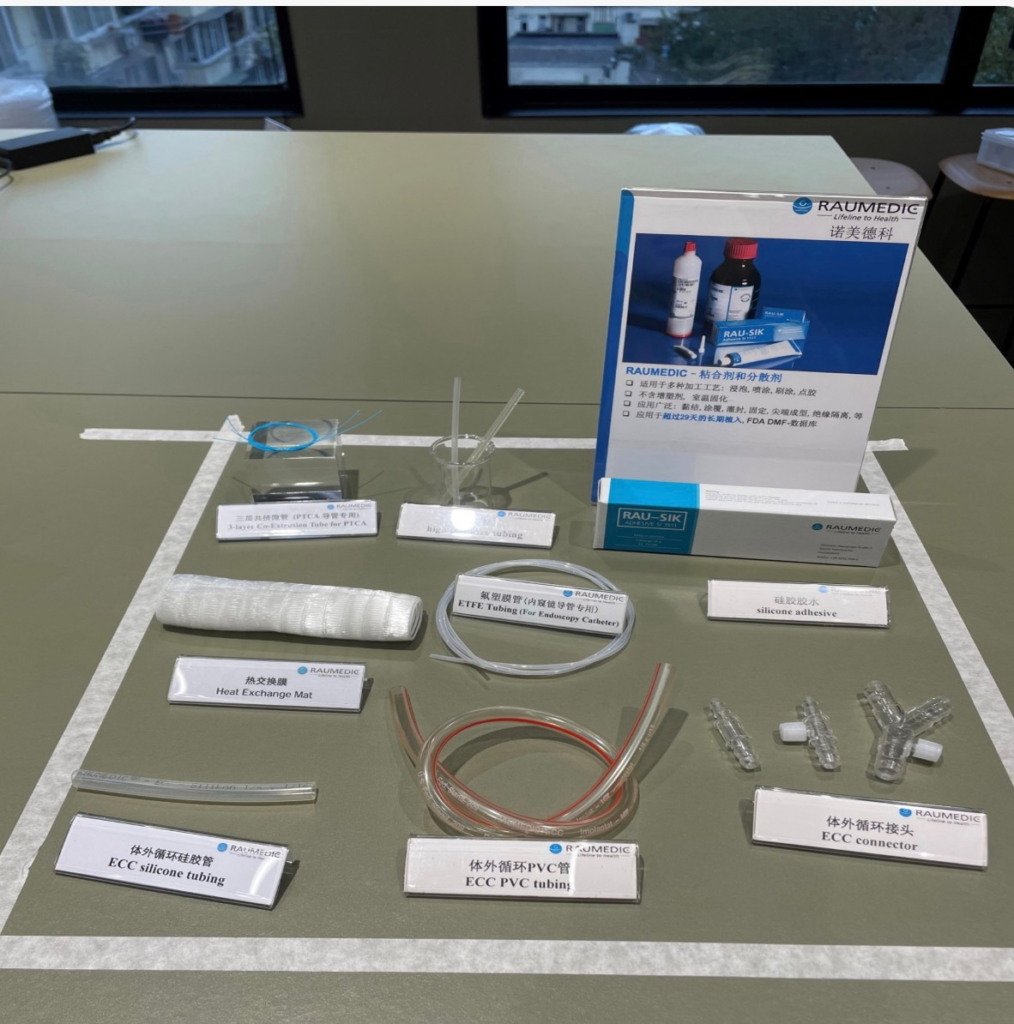
As minimally invasive procedures continue to advance, catheter designs are becoming more sophisticated, requiring greater precision in materials, component manufacturing, and production processes. Smaller diameters, improved flexibility, enhanced control, and stronger material performance are driving new challenges across the catheter supply chain.
To help industry professionals better understand these developments, we focus on the technologies and resources behind medical device innovation through Medtec China Exhibition . As one of the professional medical device manufacturing trade shows, we highlight medical device design, R&D, materials, components, processing technologies, and manufacturing solutions, allowing international manufacturers, engineers, OEMs, and R&D professionals to explore the suppliers and expertise involved in modern medical product development.
Behind Every Catheter System Is a Complex Component Supply Chain
Catheter production involves multiple manufacturing stages rather than a single production process. The tubing structure may determine flexibility and fluid delivery performance, while additional components support navigation, connection, or specific medical functions.
Different catheter applications require different engineering solutions. Cardiovascular catheters may prioritize flexibility and precise movement. Diagnostic catheters may require specific sensing or imaging capabilities. Drug delivery systems may focus on controlled fluid transmission and material compatibility.
Because each application has unique requirements, component suppliers need to understand more than basic production methods. The ability to support customized designs and cooperate during product development has become increasingly important within the medical manufacturing sector.
The relationship between component design and manufacturing capability often determines whether a medical device can move successfully from development into commercial production.
The Development Process Reveals Manufacturing Challenges
The path from initial design to finished catheter components involves several stages, and each stage introduces different considerations.
Early Design: Defining Material and Structure Requirements
The first challenge appears during the design stage. Medical device developers need to determine the required balance between flexibility, strength, dimensional accuracy, and application performance.
Material selection plays an important role in this process. Different polymers and composite materials provide different mechanical characteristics, affecting how tubing performs during use.
The structure of the component is equally important. Wall thickness, internal diameter, reinforcement layers, and surface characteristics may influence the final function of the catheter system.
At this stage, manufacturing input can help identify whether a design is suitable for practical production or requires modification.
Prototype Stage: Testing Manufacturing Feasibility
A successful prototype demonstrates that a concept can work, but it does not always indicate that the design is ready for large-scale production.
During prototype development, manufacturers often need to evaluate production methods, processing conditions, and potential limitations. A component that performs well in small quantities may require adjustments to achieve consistent results.
For medical tubing, factors such as extrusion parameters, material behavior, and dimensional control can directly influence production feasibility.
This stage highlights the importance of cooperation between engineering teams and manufacturing specialists. Early communication can reduce unnecessary redesign and improve the transition toward production.
Production Stage: Maintaining Consistency at Scale
Commercial manufacturing introduces new requirements related to quality control and repeatability. Medical components must maintain stable performance across different production batches.
For catheter tubing and related components, small variations in dimensions or material properties may affect device performance. Therefore, manufacturers need reliable processes, inspection systems, and production management methods.
The ability to maintain consistency during scale-up is often a major factor when evaluating manufacturing capabilities.
Medical Tubing Technology Is Moving Toward More Specialized Solutions
The development of medical tubing is no longer limited to producing standard polymer tubes. Advanced medical devices increasingly require customized solutions designed around specific clinical applications.
Multilayer Structures Support More Complex Functions
Many modern catheter systems use multilayer tubing designs that combine different material characteristics within a single component. One layer may provide flexibility, while another improves strength, durability, or fluid control.
Producing these structures requires precise manufacturing techniques and strong process control. The interaction between different materials must be carefully managed to maintain overall performance.
Customized Extrusion Matches Specific Device Requirements
Extrusion technology remains a key manufacturing method for medical tubing. However, advanced applications often require customized extrusion profiles, tighter tolerances, and specialized production conditions.
Manufacturers with experience in customized extrusion can better support complex catheter designs that differ from standard component requirements.
Supplier Evaluation Goes Beyond Manufacturing Equipment
Medical component production requires more than advanced machinery. Supplier capability is influenced by engineering knowledge, production experience, and the ability to support long-term development.
A supplier’s understanding of medical applications can affect the quality of technical communication during development. Experience with similar projects may provide valuable insight into material selection, processing methods, and production challenges.
Customization capability is another important consideration. Many catheter components require adjustments based on device function, size limitations, or clinical requirements.
Quality management also remains essential. Stable processes and effective inspection methods help ensure that components maintain reliable performance throughout production.
China’s Role in the Global Catheter Component Supply Chain
China has developed a broad medical manufacturing ecosystem that includes materials suppliers, precision processing companies, component manufacturers, and production service providers.
The medical component sector has continued to move toward more specialized manufacturing capabilities. Precision extrusion, customized processing, and integrated production services are becoming increasingly important as global medical device requirements become more advanced.
For international medical device manufacturers, China’s supply chain offers access to a wide range of manufacturing resources. However, supplier selection remains dependent on technical capability, quality standards, and experience with medical applications.
What Medical Device Manufacturing Trade Shows Reveal About Industry Capabilities
Industry exhibitions provide a concentrated view of technologies and manufacturing approaches across the medical supply chain. For catheter components, such events allow deeper understanding of materials, processing methods, and supplier capabilities.
Medtec China Exhibition brings together companies involved in medical materials, components, manufacturing technologies, and related services. The event focuses on the upstream processes behind medical device production rather than only finished products.
This makes it a valuable reference point for understanding how medical tubing and catheter technologies are developing. Discussions around manufacturing methods, component design, and production challenges can provide insight into current industry directions.
The Future of Catheter Component Manufacturing
As medical devices continue to become smaller, more precise, and more specialized, catheter component manufacturing will require stronger integration between materials, engineering, and production technologies.The ability to transform complex designs into reliable components will remain an important factor in medical device development. Suppliers with advanced manufacturing capabilities and experience in customized solutions will continue to play a significant role in supporting the evolution of catheter-based technologies.