
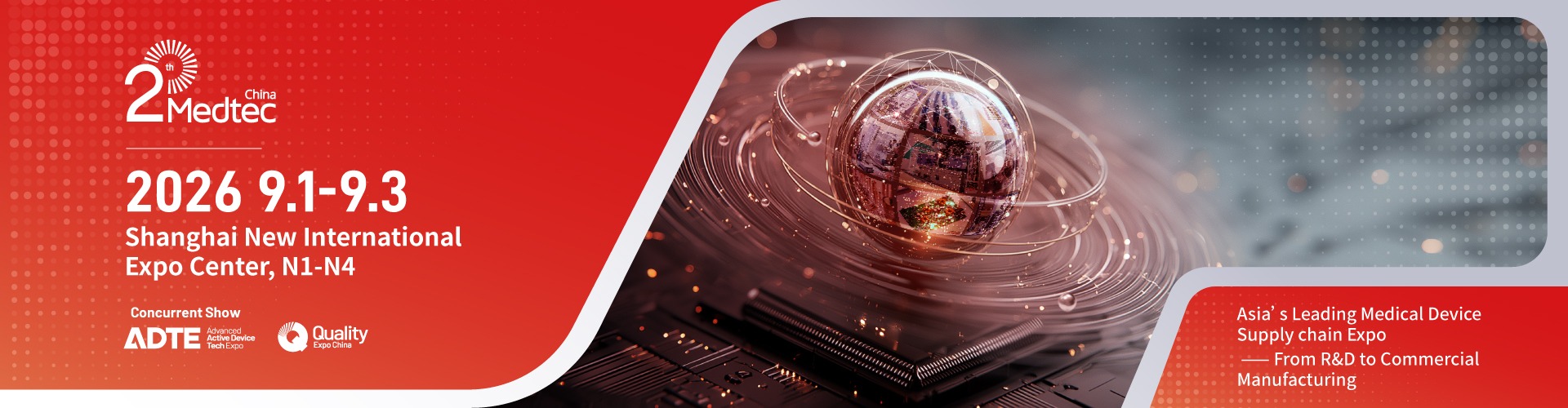
If you are evaluating the 2026 Medtec China exhibition, it helps to see it as more than a trade show. Medtec China is positioned as a medical device R&D and manufacturing exhibition that connects OEMs, engineers, sourcing teams, and manufacturing partners across the medical supply chain. The 2026 event will take place September 1–3, 2026, at SNIEC N1–N4 in Shanghai. Visitors can pre-register for free before August 30, while onsite entry requires a paid ticket. If your team wants sharper supplier insight, faster component comparisons, and a more efficient path to qualified partnerships, review the latest Medtec exhibitors and plan to visit Medtec China exhibition with a clear sourcing agenda.
Why Orthopedic Component Sourcing Requires a Different Approach
Orthopedic devices sit in a demanding category. Whether you are sourcing parts for trauma systems, spinal systems, joint reconstruction, or sports medicine applications, the standard is high from the start.
These components often require:
- Tight dimensional control
- Reliable mechanical performance
- Strict material consistency
- Clean surface finishing
- Strong documentation and traceability
- Stable long-term supply
That means supplier selection cannot rest on price alone. A component may look simple on paper, but small issues in machining, finishing, or process control can create major downstream risk. For OEMs and engineering teams, the sourcing challenge is not only finding a capable vendor. It is finding a partner that can support performance, compliance, and scale at the same time.
What International Medical Expos Offer Orthopedic Buyers
A focused expo visit can shorten the time it takes to understand the orthopedic supply base. Instead of researching suppliers one by one, your team can compare capabilities, ask technical questions, and identify which manufacturers appear strongest in the areas that matter most.
Why expos are useful for orthopedic sourcing
International medical expos help buyers:
- Compare multiple suppliers in one trip
- Review specialized manufacturing capabilities
- Explore materials and process options
- Assess how suppliers talk about quality systems
- Identify partners for prototypes, pilot runs, or volume production
- Spot new technologies in surface treatment, automation, and inspection
For orthopedic sourcing, this matters because specialized capability is often spread across different vendors. One supplier may be strong in titanium machining, another in surface treatment, and another in inspection or packaging support. The expo environment helps you see where those strengths sit.
Sourcing Priorities in Orthopedic Components
Not every orthopedic sourcing project has the same needs, but most teams evaluate a familiar group of priorities.
1. Precision and repeatability
Orthopedic components are often geometry-sensitive. Small variations can affect fit, function, and assembly performance.
Key questions include:
- Can the supplier hold tight tolerances consistently?
- How mature is the machining process?
- What inspection methods support repeatability?
- Can they scale without losing control?
2. Material expertise
Orthopedic products often involve advanced metals and other engineered materials that need careful handling.
Teams usually want suppliers that understand:
- Material behavior during machining
- Batch consistency
- Traceability requirements
- Effects of downstream finishing or treatment
3. Quality system maturity
A supplier may have impressive equipment but still lack the process discipline needed for medical applications. Quality maturity shows up in documentation, change control, inspection practices, and issue response.
4. Commercial and operational fit
Even a technically strong supplier may not be the right fit if lead times, communication, or capacity do not match your needs. Good sourcing decisions balance technical strength with practical execution.
Materials and Manufacturing Capabilities That Deserve Attention
Orthopedic buyers should look closely at both materials expertise and the precision processes that support implant-grade performance.
Material priorities in orthopedic sourcing
Common areas of interest include:
- Titanium and titanium alloys
- Stainless steel for selected applications
- Cobalt-chrome and other high-performance alloys
- Specialized materials used in implant-adjacent components or instruments
The material itself is only part of the story. Buyers should also ask how the supplier manages incoming material control, batch records, and process stability.
Questions worth asking about materials
- Which orthopedic or implant-related materials do you process most often?
- How do you maintain material traceability?
- What controls do you apply to incoming inspection?
- How do you manage lot segregation and records?
These questions help move the conversation beyond general capability claims.
Precision manufacturing matters just as much
Orthopedic components often depend on advanced manufacturing methods, especially where complex geometry or surface requirements matter.
Areas to review at the expo may include:
- CNC machining capability
- High-precision milling and turning
- Laser processing
- Additive manufacturing support
- Tooling and fixture control
- Process validation and repeatability
If your team is sourcing complex implant components, it is worth asking not only what machines a supplier owns, but how they control the process around them.
Surface Treatment and Finishing: Often the Real Differentiator
In orthopedic manufacturing, surface treatment can be just as important as base machining. Surface condition affects performance, cleanliness, integration, and long-term product quality.
Why finishing capability matters
Depending on the application, you may need to evaluate:
- Surface roughness control
- Polishing consistency
- Coating support
- Passivation or cleaning processes
- Preparation for downstream treatments
- Packaging readiness after finishing
A supplier that machines well but finishes poorly can still create unacceptable risk.
What to ask suppliers about surface treatment
Use practical questions such as:
- Which finishing processes do you perform in-house?
- What processes are outsourced?
- How do you verify surface quality?
- What inspection methods support finished-part acceptance?
- How do you prevent contamination or handling damage after finishing?
These questions often reveal how well a supplier understands real medical production needs.
Quality Assurance Is Not a Side Topic
For orthopedic OEMs, quality assurance must be part of the first conversation, not something saved for later.
Strong quality signals to look for
During expo discussions, pay attention to whether suppliers can clearly explain:
- Inspection methods and metrology capability
- In-process quality control
- Final inspection standards
- Documentation support
- Traceability systems
- Change control practices
- Nonconformance handling
If answers stay vague, that is useful information. Strong suppliers usually speak clearly about how quality is built into the process.
A simple qualification lens
When comparing potential partners, it helps to evaluate them across a few basic categories:
- Technical fit
- Material and process expertise
- Surface treatment readiness
- Quality system confidence
- Communication and follow-up speed
- Capacity and scale potential
This creates a more useful comparison than relying on booth impressions alone.
How to Qualify Specialized Orthopedic Suppliers at an Expo
Expo meetings move fast, so a little preparation goes a long way.
Before the event
Come with a focused shortlist and clear needs. Know:
- Which component types you are sourcing
- What materials matter most
- Which tolerances or finishes are critical
- Whether you need prototype, pilot, or volume support
- What documentation level your team expects
During the meeting
Use short, direct questions that test real capability. For example:
- What orthopedic projects have you supported?
- Which tolerances do you hold most often in this category?
- What finishing challenges do customers raise most?
- How do you support traceability and change control?
- What is your path from development work to scaled production?
After the meeting
Take notes right away. Then sort suppliers into groups:
- Immediate follow-up candidates
- Technical review candidates
- Backup or watch-list suppliers
That structure makes the expo more useful once you return to formal evaluation.
How Expos Help Identify Specialized Partners Faster
Orthopedic sourcing rarely succeeds through broad supplier searches alone. The most valuable partners are often the ones with niche strengths that fit your exact product and process needs.
An international medical expo helps you identify those partners by making it easier to compare:
- Specialized machining depth
- Orthopedic material familiarity
- Finishing and surface control capability
- Quality and metrology support
- Responsiveness from technical and commercial teams
It also helps you see who understands orthopedic manufacturing as a discipline, not just precision metalworking in general.
Final Thoughts
Orthopedic implant component sourcing demands more than a capable machine shop. It requires suppliers that can support precision, material control, finishing quality, documentation, and long-term reliability. International medical expos create a practical setting to compare those strengths in real time. For sourcing, engineering, and OEM teams, the value is clear: with the right plan, an expo visit can help you identify specialized partners faster, ask better technical questions, and build a stronger shortlist for orthopedic programs that cannot afford avoidable risk.