
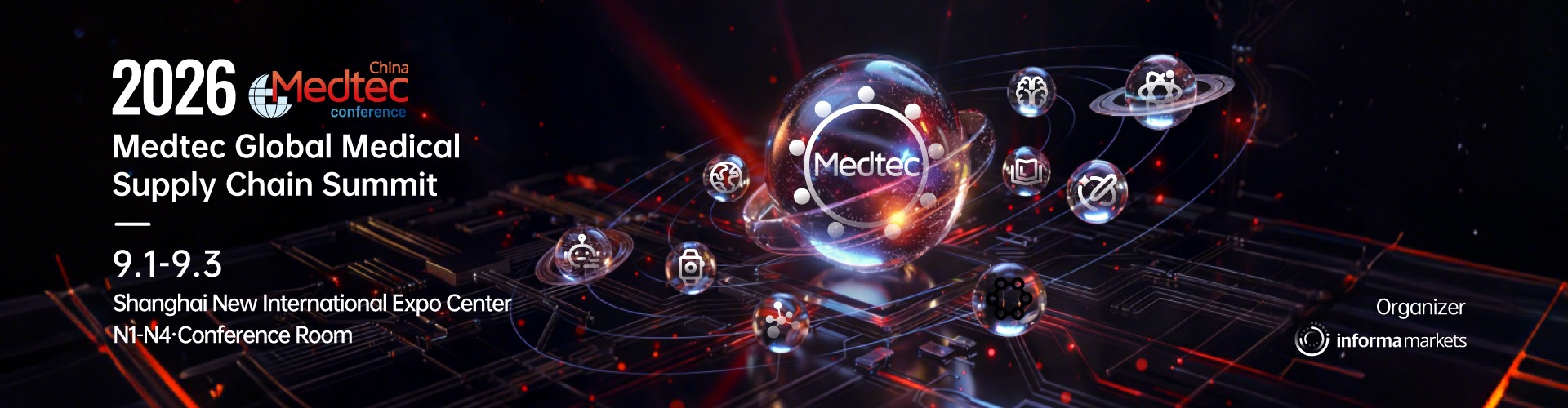
If you are planning around the Medtec China medical expo, it helps to think beyond the event itself. Medtec China is positioned as a medical device R&D and manufacturing exhibition, bringing together suppliers, engineers, sourcing teams, and operations leaders across materials, components, manufacturing, automation, packaging, testing, and regulatory support. The 2026 event takes place September 1–3, 2026, at SNIEC N1–N4 in Shanghai. Visitors can pre-register for free before August 30, while onsite entry requires a paid ticket. If your goal is not just to meet vendors but to build a stronger supply base for the years ahead, explore the global medical expo details and plan to attend 2026 Medtec China so you can turn live market insight into a smarter long-term sourcing strategy.
Why Expo Insights Matter for Long-Term Supplier Planning
Many sourcing teams treat an expo as a short-term opportunity. They walk the floor, collect brochures, compare a few quotes, and follow up with one or two promising vendors.
That can help in the moment. But it often misses the bigger value.
A strong medical device supply strategy is not built on one supplier conversation or one urgent purchasing need. It is built on patterns, comparisons, risk awareness, and a clear view of how your supplier network should evolve over time. That is where international medical expos become more useful. They let you see the market in one place.
You can compare:
- Supplier depth across categories
- New manufacturing capabilities
- Shifts in quality and compliance maturity
- Emerging specialization areas
- Signs of scale, resilience, and investment
That broader view helps you move from reactive buying to deliberate supplier strategy.
Move Beyond One-Off Booth Visits
A booth visit should be a starting point, not the strategy itself.
The problem with one-off supplier decisions
When teams make supplier decisions based only on isolated meetings, they often run into avoidable issues:
- Overreliance on one strong presenter
- Too much focus on short-term price
- Weak comparison across alternatives
- Limited visibility into market direction
- Gaps in backup supplier planning
This is especially risky in medical device manufacturing, where quality, documentation, process control, and continuity matter as much as cost.
Think in terms of supplier network design
Instead of asking, “Which booth looked best?” ask bigger questions:
- Which supplier types do we need in our network?
- Where are we too dependent on one source?
- Which categories need both a specialist and a backup supplier?
- Where do we need innovation partners, not just production vendors?
- Which capabilities are becoming more important for the next three years?
That shift changes how you use expo time. You stop hunting only for immediate solutions and start mapping future supply strength.
Compare Suppliers Beyond Price
Price matters. It just should not be the only lens.
Why lowest cost can weaken long-term performance
A low quote may look attractive at the show, but it may hide future problems such as:
- Inconsistent quality
- Limited engineering support
- Weak change control
- Poor communication
- Slow scale-up
- Documentation gaps
- Higher disruption risk
Over time, those issues can cost more than the initial savings.
Build a broader comparison framework
When reviewing suppliers after an expo, compare them across multiple factors:
Commercial fit
- Pricing logic
- MOQ flexibility
- Payment terms
- Cost stability potential
Operational fit
- Capacity
- Lead times
- Process control
- Delivery reliability
Technical fit
- Product specialization
- Engineering support
- Material or process expertise
- Ability to handle your complexity level
Quality and compliance fit
- Traceability
- Documentation discipline
- Inspection methods
- Medical device experience
Partnership fit
- Communication quality
- Speed of follow-up
- Openness about limits
- Willingness to solve problems
A supplier strategy gets stronger when price is one input, not the whole decision.
Balance Resilience and Specialization
One of the hardest sourcing decisions is choosing between highly specialized suppliers and broader, more flexible partners. In reality, most companies need both.
Why specialization matters
Specialized suppliers often bring deeper expertise in a narrow area. They may offer:
- Better process knowledge
- Stronger technical support
- More advanced quality control in specific applications
- Faster problem-solving in their niche
These suppliers can be valuable when your product has strict technical requirements or when performance risk is high.
Why resilience matters just as much
A highly specialized supplier can also create exposure if you have no backup path. Long-term strategy should account for:
- Single-source dependency
- Regional concentration
- Capacity constraints
- Material availability risk
- Limited flexibility during demand swings
This is why resilience has become a core sourcing concern.
A practical way to balance both
A healthier supplier strategy often includes:
- Primary specialists for critical or high-value applications
- Qualified secondary sources for continuity planning
- Regional alternatives where logistics or market risk matters
- Development-stage partners for innovation and prototyping
- Scale-stage partners for volume and cost control
The right mix depends on your product portfolio, but the principle is simple: do not trade all resilience for expertise, or all expertise for flexibility.
Look for Patterns Across Exhibitors
One supplier may tell you about its strengths. Ten suppliers in the same category can tell you where the market is going.
That is one of the most valuable parts of an expo.
What patterns can reveal
As you compare exhibitors, watch for recurring signals such as:
- More investment in automation
- Stronger emphasis on traceability
- Growing demand for material innovation
- Better integration of testing and quality systems
- Increased focus on packaging and sterilization efficiency
- Greater openness about regional supply strategies
These patterns help you see whether your sourcing model is aligned with the market or falling behind it.
Questions to ask yourself after multiple meetings
After a day on the floor, review trends like these:
- Which capabilities are becoming standard?
- Where are suppliers differentiating most clearly?
- Which categories look crowded, and which seem limited?
- Are suppliers investing more in scale, quality, or innovation?
- Where do we have enough options, and where are we exposed?
This is how expo visits become strategic market research, not just vendor screening.
Turn Expo Findings Into a Structured Sourcing Roadmap
The real value of an expo comes after the event, when your team turns observations into action.
Step 1: Organize suppliers by role
Do not keep your notes as a loose contact list. Sort suppliers into strategic groups such as:
- Immediate sourcing candidates
- Backup or contingency suppliers
- Innovation or development partners
- Regional expansion options
- Monitoring-only vendors for future review
This gives your team a usable framework.
Step 2: Score findings consistently
Use a simple evaluation sheet to compare suppliers on the same criteria. Include:
- Technical fit
- Quality confidence
- Commercial potential
- Capacity and resilience
- Strategic importance
- Follow-up urgency
Consistency matters. Without it, the loudest booth or freshest memory often wins.
Step 3: Identify network gaps
Use expo findings to spot weaknesses in your current supply base.
For example:
- Do you rely too heavily on one process supplier?
- Are you missing qualified alternatives in a critical category?
- Do you need stronger partners in quality-sensitive applications?
- Is your network too cost-focused and not resilient enough?
These answers should shape your next sourcing priorities.
Step 4: Set a 12- to 24-month plan
A long-term supplier strategy should extend beyond current RFQs. Build a roadmap that covers:
- Suppliers to qualify now
- Suppliers to develop as backups
- Categories to monitor for change
- Capabilities to add over time
- Risks to reduce through diversification
This helps procurement and operations stay aligned instead of reacting project by project.
Make Expo Learnings Cross-Functional
Supplier strategy should not sit only with procurement.
The best post-expo decisions often involve input from:
- Sourcing
- Engineering
- Quality
- Operations
- Regulatory
- Product teams
Each group sees different risks and opportunities. Procurement may focus on leverage and continuity. Engineering may notice process fit. Quality may spot documentation weaknesses. Operations may care most about scale and delivery stability.
A cross-functional review turns expo impressions into stronger decisions.
Common Mistakes to Avoid
Even experienced teams can lose value if they do not structure what they learn.
Watch out for these traps
- Choosing suppliers based mostly on booth polish
- Overweighting price in early comparisons
- Failing to document key findings quickly
- Ignoring backup supplier needs
- Treating each sourcing category separately with no network view
- Forgetting to convert observations into a follow-up plan
An expo generates a lot of information. Without structure, most of it fades too fast.
Final Thoughts
Building a long-term supplier strategy requires more than finding a good vendor at the right moment. It requires a clear view of how your supply network should perform under pressure, support growth, and adapt to change. International medical expos can help you build that view if you use them strategically. Compare suppliers beyond price, balance specialization with resilience, study patterns across categories, and turn what you learn into a structured roadmap. That is how a few days on the show floor can support smarter sourcing decisions for years ahead.