
Securing a reliable, innovative supply chain is the dividing line between a successful product launch and falling behind the competition. As medical technology advances, the demand for hyper-precision components, smart automation, and advanced biomaterials has never been higher. To stay ahead of these rapid industry shifts, you need direct access to the partners who are actually building the future of healthcare.
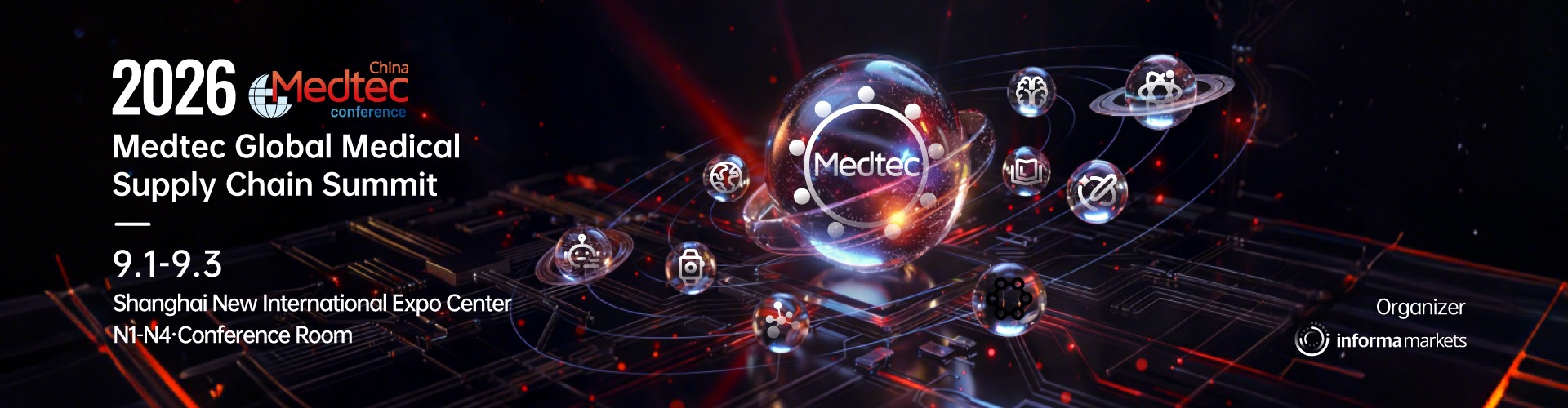
The upcoming 2026 Medtec China exhibition offers exactly that. Positioned as Asia’s premier event dedicated strictly to medical device R&D and manufacturing, this massive gathering will take place from September 1 to 3, 2026, at the SNIEC (Pudong) N1-N4 in Shanghai. The event brings together 1,100 specialized exhibitors and over 93,000 industry professionals under one roof. Pre-registration is completely free before August 30th, allowing you to easily avoid the ¥100 onsite ticket fee. Take control of your production pipeline and Register for Medtec China today to secure your spot.
As you prepare your sourcing strategy, knowing where to focus your time is critical. Here are the key supply chain sectors you must watch closely at the 2026 exhibition.
The Evolution of the Medical Manufacturing Supply Chain
For years, many companies viewed Asian manufacturing hubs primarily as cost-saving destinations. That reality has entirely changed. Today, the global market demands rapid innovation and flawless compliance, and regional suppliers have stepped up to lead the charge in technological advancement.
When you explore a comprehensive Medtec China expo, you are no longer just looking at basic assembly plants. You are engaging with world-class engineering firms that specialize in complex, active medical equipment, robotic drive controls, and cutting-edge material science. Understanding which sectors are driving this growth will help you identify the best partners for your next product cycle.
Key Supply Chain Sectors to Prioritize
To maximize your time on the exhibition floor, you should target the sectors experiencing the most rapid technological growth. Focus your attention on these three critical areas:
1. Advanced Materials and Biocompatible Components
Innovation in device design is fundamentally limited by material science. You simply cannot build a next-generation cardiovascular stent or a durable dental implant without highly specialized raw materials. The global push for better patient outcomes is driving intense research into biocompatibility and material longevity.
When you walk through the international pavilions in Halls N1 and N2, pay close attention to:
- Medical-grade polymers and composites: Essential for flexible tubing, catheters, and durable equipment housings that can withstand harsh chemical sterilization.
- Advanced ceramics and glass: High-wear materials crucial for long-lasting joint replacements and specialized dental applications.
- Specialty adhesives: Biocompatible bonding agents formulated to hold complex devices together without degrading over time.
2. Precision Manufacturing and Laser Processing
The rise of minimally invasive surgeries requires components cut to microscopic tolerances. Standard machining techniques often fall short when dealing with the delicate metallic raw materials used in modern surgical tools.
To solve these engineering bottlenecks, look closely at the precision manufacturing sectors. Suppliers in this space are showcasing super-precision laser processing and advanced CNC machine tools. Additionally, additive manufacturing (3D printing) has moved from a simple prototyping tool to a highly viable method for mass-producing custom orthopedic implants. Partnering with suppliers who utilize these advanced processing methods guarantees tighter tolerances and fewer defective batches.
3. Smart Factory Solutions and Automation
Labor shortages and rising operational costs plague medical device manufacturers worldwide. To maintain predictable production schedules, companies are heavily investing in Industry 4.0 and automated contract manufacturing.
Make sure to visit Hall N3 to explore OEM/ODM full-service contract manufacturing. Modern contract manufacturers now utilize automated optical inspection, robotic drive control, and data-driven assembly lines. By integrating automation, these suppliers eliminate the risk of human error. This technological leap ensures that whether you order ten thousand units or ten million, every single component maintains exact batch-to-batch consistency.
Strategies for a Successful Sourcing Trip
Getting the most out of a large-scale medical device exhibition requires a targeted strategy. You cannot simply wander the aisles hoping to stumble upon the perfect vendor.
To ensure your team extracts the maximum value from the event, follow these proven steps:
- Define your sourcing gaps early: Know exactly which components or materials are currently slowing down your R&D or production pipelines.
- Divide and conquer: If you travel with a multi-disciplinary team, assign specific technology sectors to different members. Send your lead engineer to evaluate new biomaterials while your procurement manager negotiates with automated OEM partners.
- Ask about compliance immediately: Do not wait until the end of a meeting to ask about regulatory standards. Verify a supplier’s ISO 13485 certifications and traceability software within the first five minutes of your conversation.
Align Your Pipeline with the Future of Healthcare
The medical device industry moves incredibly fast, and relying on outdated supply chain strategies exposes your company to unnecessary risk. You must continuously adapt to embrace automation, source innovative materials, and secure compliant manufacturing partners.
Attending this specialized manufacturing exhibition offers the fastest, most effective way to align your business with global trends. You gain immediate, face-to-face access to the technologies and partners shaping the future of healthcare. Build a more resilient, forward-thinking manufacturing strategy by connecting with the industry’s top innovators. Map out your must-see technology sectors, prepare your team, and get ready to transform your product development pipeline.