
At a Glance
- CGMs are expanding beyond diabetes care into mainstream health tracking, driving demand for advanced battery technology.
- Battery manufacturers are developing smaller, long-lasting power solutions that support implantation and extended wear.
- The future of CGMs hinges on battery innovations that balance miniaturization, energy density and safety for nextgen devices.
While patients living with diabetes have been familiar with continuous glucose monitors, and their new advancements, for years, these devices now have a place in the mainstream health technology market.
These devices are gaining popularity among individuals without Type 1 or Type 2 diabetes, primarily for tracking blood sugar responses to food and exercise, leading to dietary and lifestyle adjustments to promote weight loss and better athletic training.
While they were originally available only to people with diabetes, they are now becoming more easily accessible to average patients, with FDA recently expanding its approval of over-the-counter CGMs.
As CGMs earn over-the-counter approvals, and modernize to better treat diabetic patients, new advances require manufacturers to change up their parts to provide longer battery life, more wearability and comfort, and more.
For CGMs to be made available on a larger scale, it is critical that battery manufacturers stay ahead of trends and evolve to offer longer battery life on an even smaller and more consumer-friendly scale.
Over-the-counter availability skyrocketing
In March 2024, FDA approved the first over-the-counter CGM; Dexcom’s Stelo Glucose Biosensor System. The system has been cleared for use in patients with or without diabetes who don’t use insulin. Dexcom’s Stelo system takes readings every 15 minutes and lasts for up to 15 days.
Shortly after in June 2024, Abbott received FDA clearance for two over-the-counter CGMs; Lingo and Libre Rio. While the Libre is not yet available for purchase, the Lingo is. This device takes more frequent readings, at about one reading every minute, and lasts for up to 14 days.
Both of the devices are made with small, non-removable silver oxide batteries that can last for right around two weeks before needing to be thrown away. Currently, some CGMs, like the Dexcom G6 receiver and the Eversense transmitter, are made with rechargeable batteries, while others are made with disposable alternatives.
As the CGM and diabetes market in the U.S. is projected to skyrocket, it is likely that other big name CGM developers will throw their hats in the ring to have their own over-the-counter products approved in the coming years.
Additionally, the price point that both Abbott and Dexcom have chosen for their over-the-counter products helps to make them accessible for all types of patients. On Amazon, you can buy Dexcom’s biosensor for just $85 for a two-pack, or one month’s worth of sensors. You can purchase one Abbott Lingo on Amazon for $49.
For patients living with Type 1 diabetes, CGMs are critical. They can help to lower A1C levels, reduce high and low blood sugar episodes, and increase time-in-range.
In 2008, a clinical trial found that CGMs were critical in managing Type 1 diabetic patients, which helped to grow their popularity, development, and standing with Medicare.
The number of Americans with Type 2 diabetes is also on the rise, and CGMs can play a helpful role in helping individuals manage the disease.
For individuals with neither condition, CGMs and consistent blood sugar measurements can help manage their diets, energy levels, hydration and more.
“Early studies suggest CGMs may help detect abnormal blood sugar patterns in those with elevated risk—such as individuals who are overweight, have a strong family history of diabetes, or show borderline lab values—sometimes revealing glucose variability that standard tests might miss,” Amin Ghavami Nejad, Senior Research Scientist at Breakthrough T1D, said in a June article.
Projected industry growth
According to Mordor Intelligence, a market researcher that provides business reports and analytics, the North America blood glucose monitoring market is worth $17.55 billion in 2025, and is expected to reach $32.51 billion by 2030, a growth rate of 13.13%.
That number is driven by not just technical advancements, but also changing healthcare needs. Approximately 1.5 million new Americans are diagnosed with diabetes annually, according to the report. In addition, with the advent of over-the-counter CGMs, this market is becoming more affordable and more accessible for the masses.
According to the report, 90% of Type 1 diabetics use a CGM to monitor their blood sugar instead of a finger prick, which used to be the gold standard until fairly recently. Companies are always looking to create and market innovative, noninvasive solutions, from using radio waves and light sensors, to other advanced technologies.
In 2023, Abbott debuted the world’s smallest and thinnest CGM sensor, while Dexcom also released its most accurate interface to date. The CGM device market is expected to see 20% growth between 2024 and 2029.
This growth is also demonstrated by the fact that in the second quarter of 2025, Dexcom reported a 15% year-over-year growth, reaching a revenue of $1.157 billion. While Dexcom is known as a market leader in the space, several other medtech companies are also seeing growth from CGMs, including OSR Holdings, Abbott, Glucotrack, Medtronic, and Senseonics.
What battery makers are saying
As noted, while the majority of over-the-counter CGMs currently utilize disposable batteries, several battery makers believe this is going to change.
They believe that not only is the industry heading towards rechargeable batteries, but also more sustainable power options.
Marcel Inauen, CTO of Swiss battery maker Wyon, believes that the future will require battery makers to adapt to implantable CGMs.
“Wyon is actively developing and producing rechargeable lithium-ion batteries tailored for medical applications. We firmly believe that end users and patients will increasingly prefer rechargeable devices over disposable ones—especially as sustainability, cost-efficiency, and convenience become more critical in healthcare,” Inauen told MD+DI.
“While current over-the-counter CGM systems still rely on primary cells, we are convinced that future device generations will transition toward rechargeable battery integration. This shift is not only technically feasible, but also aligns with evolving regulatory, environmental, and user experience expectations.”
Integer, a company specializing in creating reliable power for implantable and external medical devices, is on the same page.
“We continue to focus on creating smaller implantable batteries with better energy density. Over the past 10 years, this has extended to work with a combination of active materials as well as improved mechanical designs that optimize battery capacity per cc while maintaining safety and reliability, including compliance to ISO 14971,” Chris Williams, principal sales applications engineer at Integer, told MD+DI. “These batteries are now small and powerful enough to power implantable CGMs with over one year of battery life in an incredibly small footprint.”
Powering devices for a whole year, especially over-the-counter devices, could be a major game changer for both patients and the industry as a whole. These devices will be more desirable to over-the-counter users, who do not have to change them out every two weeks. This could also help with the price point, making devices even more affordable for regular users.
For patients with diabetes, a year-long implantable would allow them peace of mind, as they can now go about regular activities for 365 days without worrying about a device.
And for Integer, implantable CGM batteries are on the very near horizon, as the company already specializes in implantable batteries for other types of devices.
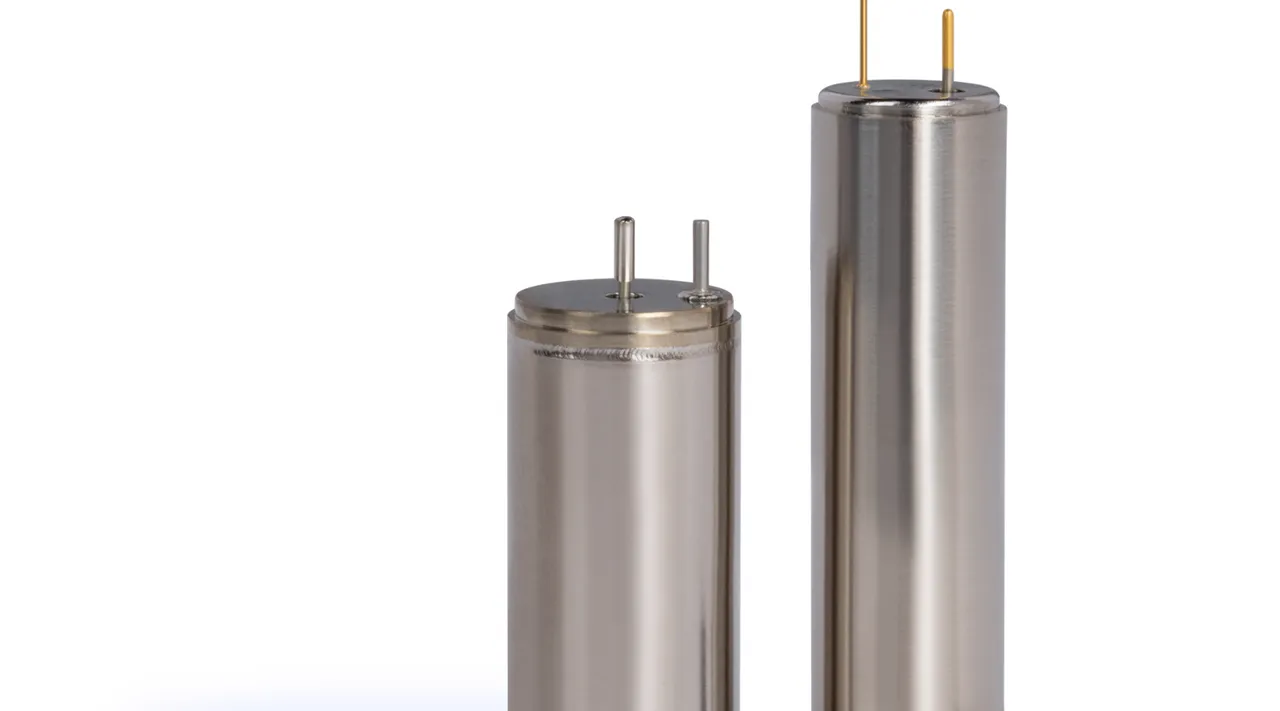
“As a leading global medical device CDMO, one of Integer’s many areas of expertise extends to the implantable medical device market; in fact, Integer is one of the largest outsourced manufacturers of implantable batteries in the world,” Williams said. “Through a combination of selective vertical integration of components and investments in automation, we have been able to drive cost and supply risk down substantially. In addition, we’ve created a variety of form factors – cylindrical, micro-coin cell (as small as 0.0047 cc), and flat batteries – that allow us to meet a range of customer needs and use cases.”
Wyon is also seeing growth in the demand for implantable CGMs, and is tailoring its batteries as such.
“Our diverse battery platforms have evolved specifically to meet the unique power profiles of long-wear medical devices such as continuous glucose monitors, diagnostics, and therapeutic systems. These devices may be worn externally or implanted within the body, requiring our platforms to accommodate stringent biocompatibility, form factor flexibility, and long-term reliability,” Inauen said. “To address these needs, Wyon integrates modular electrochemical systems that allow rapid customization for the specific application, biocompatible materials and full hermetic sealing for implantable cells, and flexible form factors tailored to device contours. These innovations ensure that our battery platforms are not only technically robust but also adaptable to the evolving demands of next-generation medical wearables and implantables.”
In order to extend time wear of batteries, both companies have taken their own unique steps, pioneering diverse new materials and technologies.
“As communication technologies have changed over time and BLE has become the standard communication modality, we have focused our battery chemistry innovation in areas specifically designed to be optimized to suit BLE communication needs,” Williams said. “Our research has concentrated on the balance of both energy density and rate capability to power modern implantable electronics. Our Xcellion rechargeable batteries all incorporate CoreGuard technology, maintaining integrity to the cell during periods of deep depletion.”
“Wyon has pioneered several material and technology innovations that directly address the stringent demands of medical wearables and implantables. These advancements reflect our commitment to miniaturization, safety, and scalable precision manufacturing, including
plastic housing technology, in-house automation systems, advanced electrochemistries, higher energy density, 0V recovery capability, and improved cycle performance and safety features. These innovations are not just technical milestones—they are strategic enablers that allow Wyon to meet the evolving needs of next-generation medical devices, from CGMs to neuromodulation systems and implantable diagnostics,” Inauen said.
The smaller, more durable, and longer lasting medical battery revolution is not just on the horizon; it has already arrived. While these batteries have not yet been implanted, or approved, in over-the-counter CGMs, it is just a matter of time, as both of these major battery companies have already proved the capabilities of long wear medical device batteries.
“Our miniaturization initiative has not only incorporated higher energy density materials, but also optimized mechanical designs to allow for increased use of active materials. A recent customer program for a next generation device included optimized mechanical designs that allowed for 20% more battery longevity in the same footprint,” Williams said. “The innovations we are pursuing include improvements to both our primary and rechargeable batteries. We already have solutions to support the power needs of implantable CGMs with no wearable, continuous Bluetooth Low Energy communication with mobile devices, longevity greater than a year, and an implant size smaller than 0.25 cc.”
What CGM companies are saying
Senseonics, a competitor in the CGM market space, is also leaning into the next generation of implantable grade miniaturized batteries. While the company does not produce over-the-counter CGMs, it produces several device iterations for patients with diabetes.
In its latest designs, the company is working to balance all of the competing demands for CGMs in one battery, including miniaturization, battery capacity, and safety.
“Higher energy density results in higher capacity in a smaller package, and the implantable CGM battery used by Eversense 365 utilizes the same chemistry as batteries used in implantable cardiac devices,” Mukul Jain, Senseonics’ COO, told MD+DI. “This chemistry has been used for over two decades with a well-established performance in medical devices.”
The company is also keenly focused on new implantable batteries, as the market demand is strong.
“The next generation sensors by Senseonics – Gemini and Freedom – will incorporate implantable grade miniaturized batteries. Freedom will be revolutionary for the CGM field with no on-body aspect to the CGM whatsoever,” Jain said. “The batteries for all CGM devices are optimized for higher energy density, so that their smaller batteries don’t sacrifice power capability. This means CGM batteries can handle measurement, calculation, and communication at the same time, without pulling battery voltage down below the working limit. All the batteries currently used in traditional CGMs are primary batteries, meaning they cannot be recharged and are designed for one time use. The current implantable sensors by Senseonics do not have a power source. Instead, they are powered by RF energy from the rechargeable and removable transmitter worn on the skin, which supports the use of single a Eversense 365 CGM system for up to one year, as opposed to the 10-15 days for a traditional CGM.”
As demand increases for smaller and smaller batteries, there are several new ways that CGM developers are going to continue to meet these demands.
“Higher energy-density solid state batteries, BLE SOC (system-on-chip) with reduced size and higher efficiency are some of the advances that will help miniaturization of the implantable batteries,” Jain said.
What’s to come
There is an almost unanimous expectation in the battery industry that year-long batteries for CGMs that allow for longwear implantable devices are the future of the industry.
The industry is poised for five specific breakthrough developments, including fully implantable systems, solid-state battery technology, energy harvesting technologies, biodegradable battery components, and integration with other wearable technologies.
Many of these breakthrough developments will be due to new, long lasting battery functions.
As consumer adoption continues to accelerate, battery manufacturers and CGM developers will likely forge even closer partnerships to overcome the technical challenges of creating devices that are simultaneously smaller, more powerful, longer-lasting, and increasingly affordable for the mass market.
source:mddionline
https://www.mddionline.com/diabetes/the-tiny-power-revolution-behind-consumer-cgms
This article is for knowledge dissemination only. If it involves infringement, please contact us for deletion.